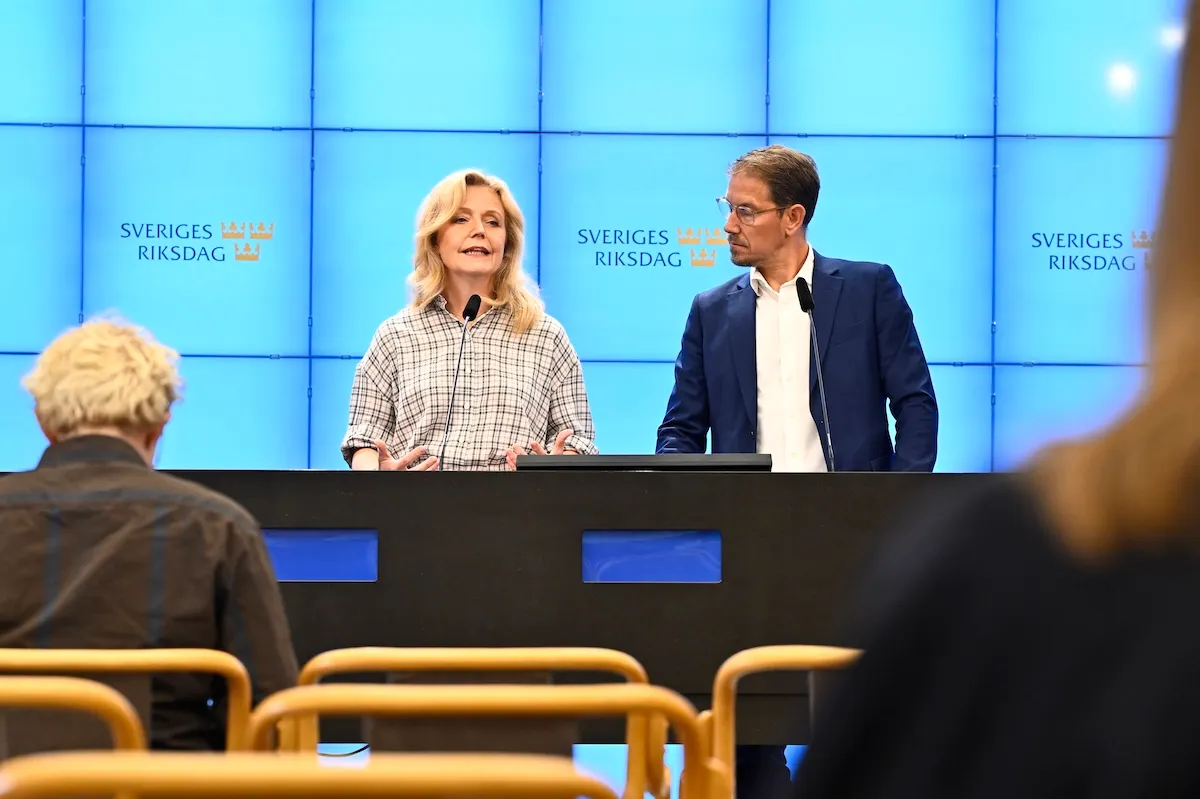
At a press conference in Stockholm, party leader Elisabeth Thand Ringqvist pointed out that labour migration had more than halved between 2023, when the first higher salary threshold was imposed, and 2025, reducing Sweden's GDP by 30 billion kronor and costing the government 10 billion kronor in tax revenue.
"When I talk to company owners, I hear the same thing over and over again: they can't find the skilled workers they need and they don't dare recruit internationally because they don't know if people can stay."
She said the party would make sure that a new "centrist" government scrapped the work permit salary thresholds brought in by the current government as soon as possible after taking power, returning Sweden to the open labour migration policy it had prior to 2023, when all that was required was that international recruits earned the minimum salary allowed for their role under collective bargaining agreements.
"This has worked before. I promise it will be one of the first decisions we take in a centrist government," she said.
Thand Ringqvist pointed out that in four years of the Tidö government Sweden had fallen from second place to sixth place in the IMD World Talent Ranking, and 11th place to 21st place in the ranking of how well countries retain foreign talent.
"I see a clear reason for this: The Swedish Democrats have won a decisive role over Swedish migration policy and those policies are costing us jobs, knowledge and taxes," she said.
"In four years of Tidö government, Sweden's power to attract international talent has fallen drastically, our image in the world has worsened and Sweden has got poorer," she said.
She dismissed Prime Minister Ulf Kristersson's claim that the reforms had only reduced the number of low-skilled foreign workers, citing statistics showing that the number of foreign workers with university degrees had also nearly halved and that only a third of international master's students now chose to stay in Sweden.
"Swedish companies who recruit competence internationally and then invest in training them don't know if that person will be able to stay, and the people who are already here don't know if they will still be secure here tomorrow," she said. "A small country that needs to grow cannot afford this kind of insecurity."