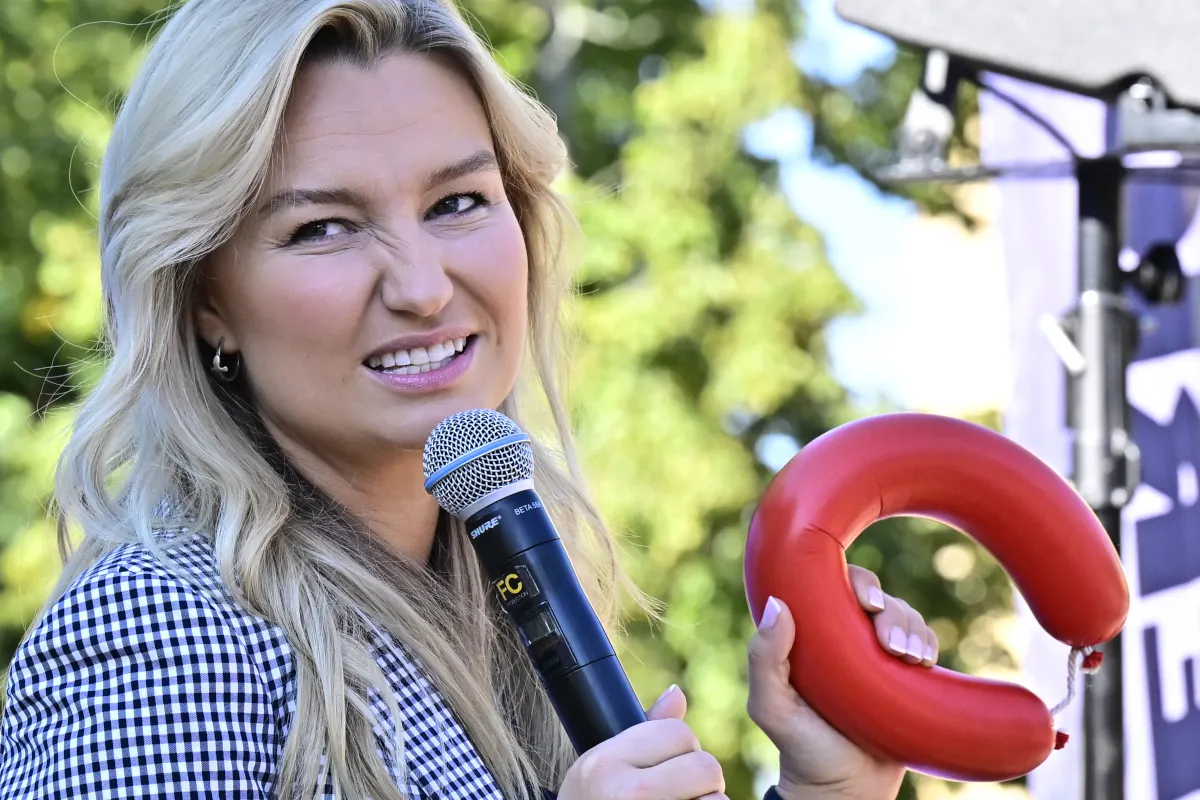
How much beef does Sweden's iconic sausage actually contain?
Manufacturers promise beef in their falukorv. But according to an investigation by public radio station P4, several varieties of the popular Swedish sausage contain almost no beef at all.
P4 commissioned a study to analyse the beef content in 19 different brands of falukorv, in the wake of an exposé by public broadcaster SVT in May which revealed that producer Vaggeryds Chark had completely removed beef from its recipe.
The analyses showed that six out of the 19 falukorv varieties tested contained 5 percent or less beef.
"Somewhere there has to be a line drawn for when you're allowed to claim a product 'contains beef', especially if it's so negligible that it can barely be measured," Christine Fransholm from the Swedish Consumers' Association told P4 Jönköping.
Jan Scherman, a board member of the Swedish Sausage Academy (Korvakademin), reacted strongly to the findings.
"I think it is a sad and utterly abysmal piece of trickery," he said.
FROM THE ARCHIVES: Why do Swedish politicians love to pose with sausages?
Two of the companies whose sausages were tested maintain that their products contain more beef than the laboratory results indicated.
On the other end of the scale was falukorv from Jokkmokks Korv & Rökeri, which contained 64 percent beef and 36 percent pork.
What kind of Swedish delicacy is falukorv, some of you may be wondering?
It is a cooked Swedish sausage that consists of grated pork, beef or horse mixed with potato starch, onion, salt and other spices.
It originated in the mines in Falun (its name means Falu sausage) in the Dalarna region hundreds of years ago, and has enjoyed EU TSG (traditional specialities guaranteed) status since 2001.
It can be eaten raw as a snack, gratinated whole in the oven, made into Sausage Stroganoff (a Swedish bastardisation of Beef Stroganoff) or, as is most common, fried in slices and served with macaroni and ketchup.
Swedes love falukorv. Many foreigners find this strange.
Swedish vocabulary: beef – nötkött
Swedish weather agency expands warnings as heatwave hits
Sweden's weather agency SMHI has expanded its warnings for high temperatures as the European heatwave hits Sweden.
SMHI had already flagged that temperatures will exceed 30C for several consecutive days in parts of the Blekinge and Kalmar regions. Nights are also expected to be uncomfortably warm.
The yellow warning for these areas remains in place from Thursday through to Sunday evening.
SMHI's expanded yellow alert warns of high temperatures across large parts of the rest of Götaland from Friday through to Sunday. This new warning stretches from Sjöbo in the south up to Skövde and Linköping.
However, at the start of next week, rain is expected to move into Sweden from the south-west, bringing cooler weather to the entire country.
Swedish vocabulary: high temperatures – höga temperaturer
Direct night trains between northern Sweden and Stockholm guaranteed for another two years
The Swedish Transport Administration has awarded rail operator SJ the contract to continue running night train services to northern Sweden until 2028.
"Night train traffic to and form northern Sweden and Norway plays a vital role for both domestic and international travellers. Demand is exceptionally high, and it is growing," said SJ CEO Jonas Abrahamsson in a statement.
DON'T MISS: The Local Games – find the Swedish word in WordroW and crack the daily sudoku
The agreement ensures daily return journeys on the Stockholm-Narvik and Stockholm-Umeå routes, offering couchette and sleeper cabins without the need for any train changes.
SJ has been operating the night trains since December 2024. Prior to that, the Norwegian operator Vy Tåg held the contract for the routes.
Swedish vocabulary: a night train – ett nattåg
Sweden's annual bear cull approved: 394 brown bears to be shot in upcoming hunt
Sweden's licensed bear hunt is set to get under way on August 21st, with a total quota of 394 bears permitted to be shot this year, making up 14 percent of the national population. The Swedish Society for Nature Conservation and the Swedish Carnivore Association have criticised the figures, and the latter intends to appeal the decisions.
The last comprehensive population survey, conducted in 2022, estimated that there are around 2,800 bears in Sweden. The brown bear is strictly protected under the EU's Habitats Directive and is a protected species under Swedish law.
Licensed bear hunting is restricted to Sweden's seven northernmost regions. The county administrative board of Dalarna was the last to announce its quota on Tuesday, capping the cull at 50 bears – of which a maximum of 27 may be females – down from 75 last year.
In Norrbotten, the number of bears permitted to be hunted has nearly doubled compared to last year, rising from 24 to 46.
"This year, very few bears – only 14 – were killed during the culling for livestock protection in Norrbotten this spring. In some years, that figure can be as high as 60," Gunilla Manbré, head of the Natural Resources and Reindeer Husbandry Unit at the county administrative board, told the TT news agency as a reason for why the figure has doubled this year.
Meanwhile, Västerbotten has authorised a quota of 100 bears, identical to last year. In autumn 2024, the region's bear population stood at just over 500, and authorities intend to bring that number down to a target population of 350.
"We believe this is far too high a cull, considering the bear is a protected and strictly regulated species. The licensed hunts in recent years have already led to a sharp decline in the bear population. Because protective culling comes on top of the licensed hunt, the total takeaway is even larger than the agreed quotas," Isak Isaksson, a predator expert at the Swedish Society for Nature Conservation, told TT.
Swedish vocabulary: a bear – en björn