I think what my Swedish husband disliked the most about living in Toronto was the work culture. He had great colleagues and a good job, but couldn't escape the pervasive cultural expectation that if you don't actually 🌟😍love!!😍🌟 your work you should pretend that you do – or, at the very least, never explicitly say that you can't wait to get away and go on holiday.
I will never forget the look on my husband's face the time he emerged from a Zoom meeting in the basement of our rented Toronto bungalow and said:
"Someone on the meeting was just back from a week of vacation. She kept talking about how good it was to be back at work. And a bunch of people agreed. One. Week."
It wasn't until I moved to his home country that I understood just how different this is from Swedish work culture norms.
Many Swedish institutions are built on a cultural valuing of work – the effects of the temperance movement, with its strong basis in the ideal of good (sober) labour, are still felt here, as are the many years of worker-focused governance – but there's nothing more Swedish than talking, at work, about how you can't wait to get away from work for your state-sponsored vacation.
That's because, historically, the key element in Swedish society and institutions, has been the workers who do said valued work – the idea being that a person who is nurtured by society will be a more effective contributor to that society. The signs of this ideal are maybe less glaringly visible in modern Sweden than rows of dyed blonde hair or the towering fluorescent letters "H&M", but they are nevertheless everywhere – in the built environment and in the lived lives of Swedes – and arguably more deeply embedded than the (admittedly ubiquitous) hair dye or fast fashion.
This history of social democracy is broad and deep enough that even in today's Sweden, which has swung, like many places, much farther to the right, many of the institutions built by social democratic policies, along with the cultures that grew out of them and along with them, are considered axiomatically Swedish to people who otherwise express more right-wing views on individualism and unfettered capitalism.
In the built environment there are the folkets hus ("people's houses" – basically community centres, but community owned and operated) and folkparker ("people's parks"), and in the less tangible realm there is the vast web of supports and protections for workers. And of these perhaps the most cherished is the right to semester – that is, to vacation.
Semester means "vacation" in Swedish, because in the 1930s a finance minster named Ernst Wigforss of the ruling Social Democratic party, noticed that in France, army service was divided into semestres – half-years. Soldiers had some semestres when they were working and others, still paid, when they were not. It seemed to him a handy way of referring to a thing he would soon successfully pass through parliament: the right to at least two consecutive weeks every year – during the summer, while the precious light lasts – of paid time off of work.
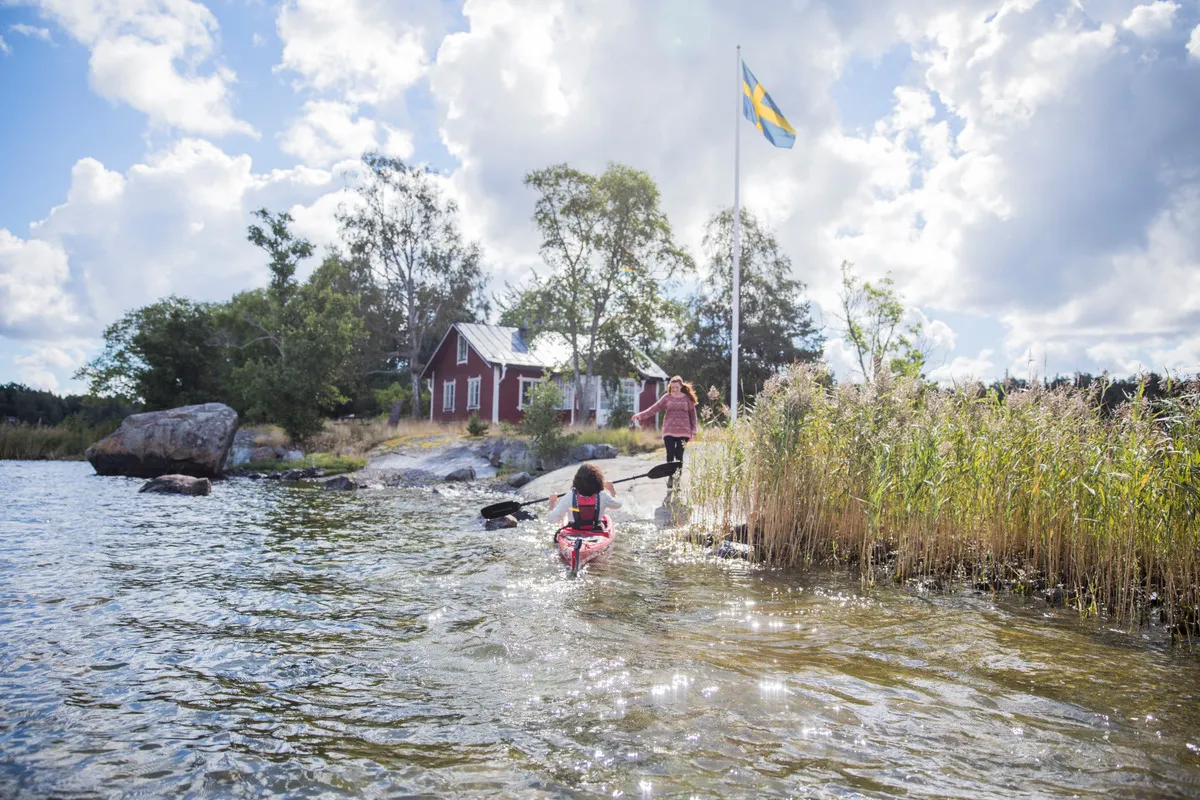
Those two consecutive weeks of paid vacation between the months of June and August have since grown to four, with one of the effects being that if you want to get anything done in Sweden after Midsummer, you're pretty much going to have to wait until autumn.
Another effect is that, especially as the summer approaches, everyone talks all the time and everywhere – including, maybe even especially, at work – about how they can't wait to go on vacation. How many weeks a person has left until semester, how much they're looking forward to not being at work for a solid month, and just generally standing in a circle reminding one another that semester is coming, are universal activities for the employed Swede. Similarly, once one returns to work after semester, the usual workplace topic of conversation is how bummed everyone is to back.
So if you're new to working in Sweden and are looking to fit in with the group (also quite important in Swedish culture!) as summer approaches, don't be shy about talking about how you're längtar efter semester ("looking forward to vacation" – literally "longing for vacation") or sighing to your colleagues (when, say, you're all dealing with a gnarly work problem) snart är det semester ("it's vacation soon").
But remember not to be too dramatic about it. As crucial as acknowledging the desire for summer time off in Sweden is the accompanying attitude that this is all, the good and the bad, part of the normal ebb and flow of life. Back at work but wish you were still on semester? Feel free to mention it to your colleagues, who will no doubt commiserate, but also add men så är det – "but so it is". C'est la vie.