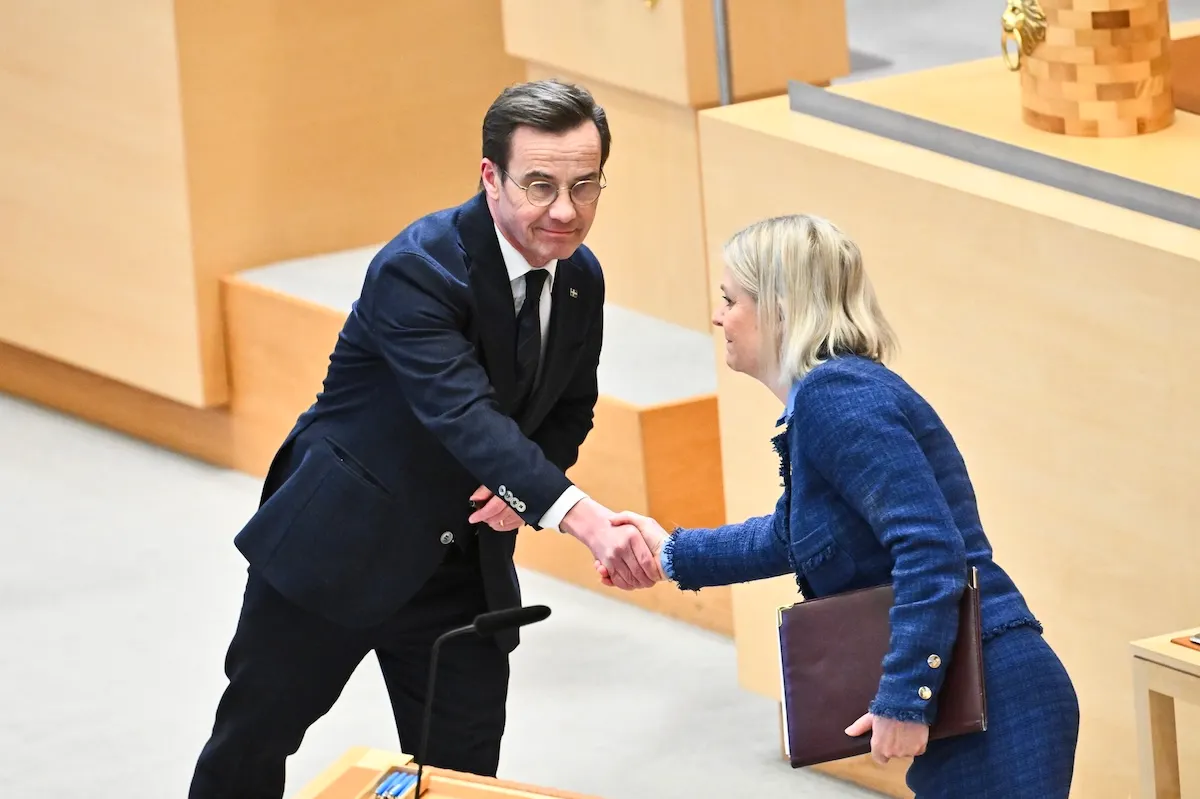
Social Democrat leader Magdalena Andersson had the confidence of 47 percent of voters in the poll, up from 45 percent in June, while the number who said they had confidence in Kristersson fell month-on-month from 39 percent to 37 percent.
The fall pushed Kristersson behind Sweden Democrat leader Jimmie Åkesson, who had the confidence of 38 percent of respondents, ranking the Moderate Party leader in third place among the leaders of the four government-supporting parties.
Christian Democrat leader Ebba Busch ranked second behind Andersson with the confidence of 41 percent of respondents.
"Andersson has a clear advantage again," Johan Martinsson, head of opinion at Demoskop told the SvD newspaper, which ordered the poll. "What we are seeing actually is a continuation of the trend that Ulf Kristersson is having difficulties with the confidence of voters."
The Moderate leader result is his worst since September 2025, while Andersson's is her best since August 2025, even though she remains well short of where she was in the autumn of 2023, when 59 percent of respondents said they had confidence in her.
Confidence in Kristersson was growing steadily between the autumn of 2025 and the spring of 2026 while support for Andersson had been falling.
The Moderate leader's result was his worst in the confidence survey since September 2025, while Andersson's was her best since August 2025 – even though she remains well short of where she was in the autumn of 2023, when 59 percent of respondents said they had confidence in her.
Some analysts have blamed the shift in direction to Kristersson's decision on April 1st to commit to giving the Sweden Democrats ministerial positions after the election.
Martinsson said the Moderates' poor performance in the polls had led to a lot of "questioning, internal discussions, dissatisfaction and anxiety" among supporters of the right-wing bloc, which he said may have influenced confidence in Kristersson.