Overall, more than 108.5 million entries and exits of non-EU nationals were recorded, and 43,728 people were refused entry in the Schengen territory since the EES was first launched last October.
A total 16,383 had no 'appropriate justification of stay', according to a European Commission document, 6,141 had no valid visa or residence permit, 1,524 carried no valid travel document, and 1,128 were considered a security threat. Meanwhile, 298 tried to enter the Schengen zone on a false or counterfeit travel document, and 122 had a false or counterfeit residence permit.
But some 8,739 were due to overstays, referring to people who stayed beyond their permitted time limit in the Schengen area.
Penalties for over-staying include a fine but also the more draconian measure of being banned from entering the EU.
READ ALSO: 'Trend will continue' - Number of people refused entry to Europe sees sharp rise
EES roll out has 'experienced challenges'
The EES, which has gradually been introduced since October is aimed at increasing security at EU/Schengen borders.
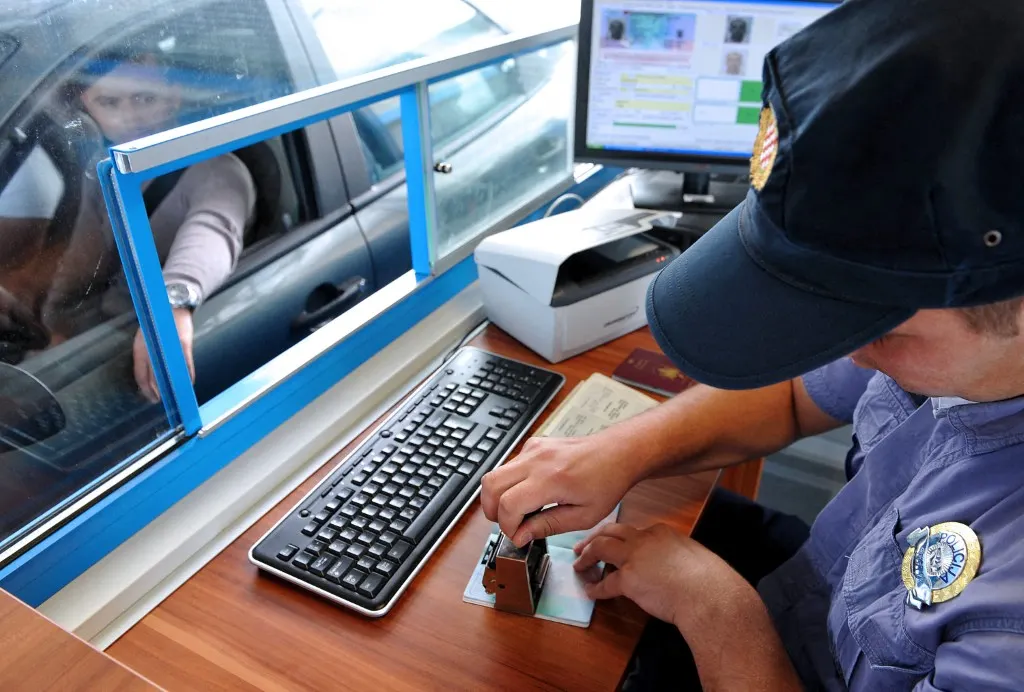
EES digitally registers non-EU nationals and shares in real time information about who crosses EU borders, when and where, as well as information about refusals of entry, across Schengen countries. It replaces the manual stamping of passports.
But several locations reported long queues at the border and the Commission recognised that some countries “experienced challenges related to infrastructure, for example with the functioning of self-service systems, the capacity to fully register the biometric data, and the congestion of flights in specific time slots.”
“The option to temporarily suspend the operations of the EES, either fully or partially, was exercised only on a limited number of occasions,” the report added.
Airports and the travel industry have been warning about possible delays and called for flexibility on the implementation of the system over the peak travel season in summer.
Among the priorities outlined for 2026-2027, the report mentions the upcoming launch of the European Travel Information and Authorisation System (ETIAS), which will require short-term visitors to register and obtain a travel authorisation before departure. This is expected at the end of the year.
“Preparations are progressing, with coordinated efforts underway at EU and national levels to ensure ETIAS’ effective roll-out. Early involvement of travel industry stakeholders is crucial for the success of this endeavour,” the report says.
The Commission said that in 2025, the Schengen area “continued to be the most visited destination in the world, attracting more than 790 million travellers”.
The 90-day rule
Although EES also has security functions, part of the reason for its introduction is to better track the '90-day rule' - which allows non-EU citizens from certain countries (including the UK, USA, Canada, Australia and New Zealand) to spend up to 90 days in every 180 in the EU without requiring a visa.
Previously the 90 days were tracked with passport stamping, but the EES automatically calculates the length of stay based on entry and exit dates, so over-stayers are instantly flagged the next time they try to cross an EU external border
In early February, drivers from the Western Balkans blocked Schengen border crossings complaining that a stricter enforcement of the 90/180 rule would make regular work in the EU impossible.
UK transport and logistics organisations also urged the Commission to suspend penalties linked to the 90/180 days, warning that this could leave operators short of drivers and disrupt supply chains.
In January this year The Local reported how the European Commission announced it would look into allowing certain non-EU professionals to stay in the EU beyond the current 90/180-day rule