Anyone who is not signed up to our Brits in Europe & Brexit newsletter can do so by going to their newsletter options on the membership page.
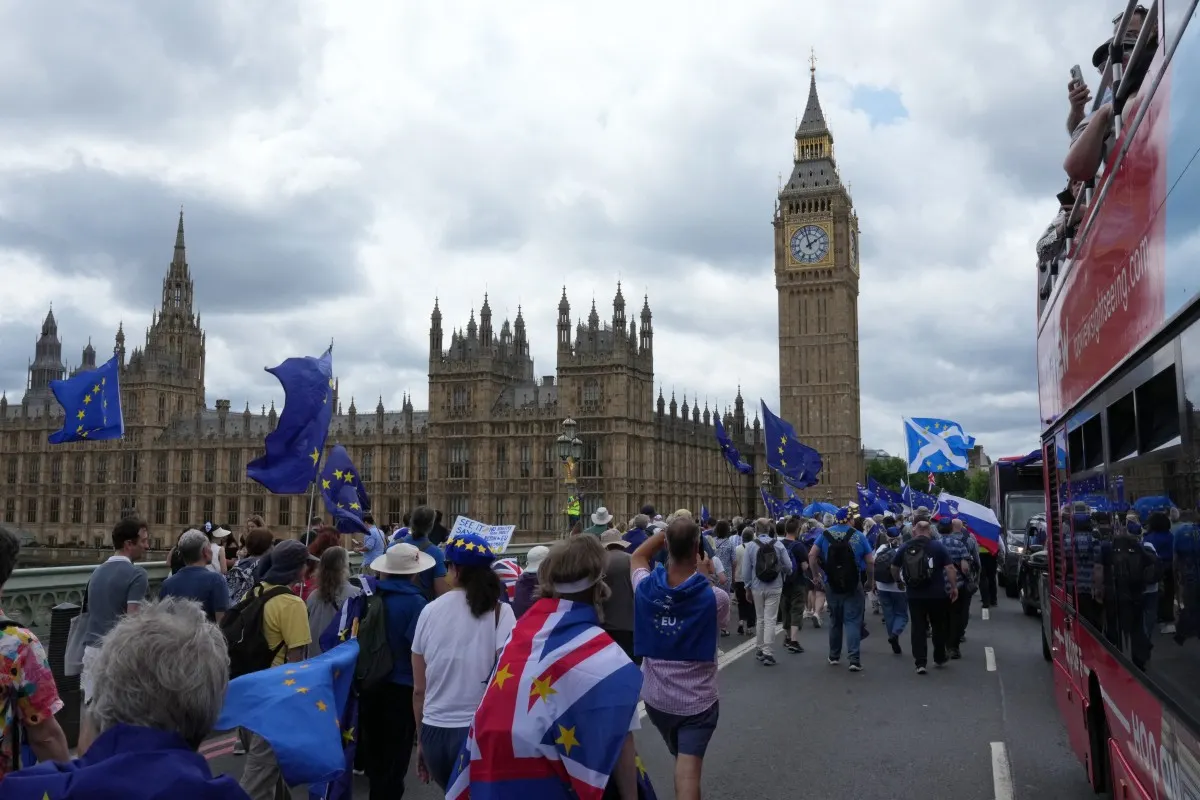
The UK's Labour government has been clear that it is keen to pursue the so-called post-Brexit ‘reset’ of UK-EU relationships in order to bring London closer to Brussels once again after the years of fraught relations that followed the withdrawal from the bloc.
The EU and the UK were planning to hold its next summit on July 22nd during which several agreements were expected to be announced that would reflect the closer ties between the UK and the 27 EU member states.
However political manoeuverings in London have unfortunately forced the summit to be postponed and no new date has yet been set.
The resignation of Keir Starmer as UK Prime Minister has put the plan on hold. Although pro-EU Andy Burnham is widely expected to take over as next PM it may be a while before a date is set for the next summit.
From the EU side, it is likely that leaders will wait to see the outcomes of any leadership contest and the Labour party conference in September before they agree to any date.
So what was meant to be up for discussion?
As Claudia Delpero reported in this article negotiations were still ongoing on a youth mobility scheme, which would allow young people to move between the UK and EU countries to work and study for a limited period of time with facilitated visas.
At the centre of contention was, however, the UK demand to cap the number of EU nationals who could access the scheme, as well as the EU request that UK universities would apply home tuition fees – rather than the much higher international fees – to European students.
Other areas on the agenda of the summit were the integration of electricity markets and the plan to remove checks on the trade of agri-food products between the UK and the EU.
We'll keep you posted as soon as a new summit date is announced.
The tenth anniversary of Brexit has passed but it was one that the Spanish press took a keen interest in, as my colleague in Spain Conor Faulkner reported.
Spain's paper of record El País took balance of the technical changes and evolving British-Spanish relationship, noting that "10 years after Brexit" there are "fewer students, more trade controls and a red tape nightmare".
"The break between London and the EU", it said, "has led to new restrictions on mobility and trade, which have affected a wide range of sectors".
Spain's state broadcaster RTVE interviewed Brits in Spain, focusing primarily on freedom of movement and residence changes, plus difficulties Brits wanting to move to Spain have in getting the right to work, to drive, to buy a home, to set up a business or to receive healthcare in Spain after the vote.
As its report notes, "to live, work or study [in Spain]... you must apply for residency or use one of the special visas (such as a non-lucrative visa, a digital nomad visa or a student visa)."
READ MORE: 'A red tape nightmare': How Spain's press covered Brexit's 10th anniversary
In Germany my colleague Tom Pugh also heard from readers about the practical and emotional impact that Brexit has had on their lives in Germany.
For many, the most immediate and tangible impact has been administrative. The new reality was captured eloquently by Chris Owen, 74, originally from Dorking and now living in Cologne.
“In order to remain at home in Cologne, I had to acquire German citizenship,” he said.
Arguably, Chris was one of the lucky ones. Simon, who lives in Frankfurt, revealed the scale of the new restrictions for people unable or unwilling to acquire German citizenship.
“(Brexit) has affected everything: work promotion opportunities, ease of travel, mobility options, sending parcels home. Everything,” he said.
And in France our journalist James Harrington detailed the consequences of Brexit on the lives of many.
Second home-owner Kevin Agutter told us: “We bought a holiday home in Charente in 2015. We had not given any thought to the possibility of an exit from the EU. I was working as a sales rep in the UK for a French company and was looking forward to possibly moving to France if a position came up in south-west France.
“Brexit has had a massive impact on us. I lost my job with the French company in 2023 as they stopped exporting to the UK due to the burden of red tape and import taxes.
“Family issues in the UK delayed our application for French citizenship and we now visit France less and less due to the 90/180 rule and the changes to the pet passport.
“We were spending in the region of €50,000 in France per year spread around local businesses, tradespeople, food, drink, weekends away. This is now down to less than €8,000 per year.”
And finally as airports around Europe plead for EES checks to be suspended to avoid queues at the border at the peak summer period we looked at what the chances are that authorities in Italy will accept that demand.
Thanks for reading.
Anyone who is not signed up to our Brits in Europe & Brexit newsletter can do so by going to their newsletter options on the membership page.