Hej,
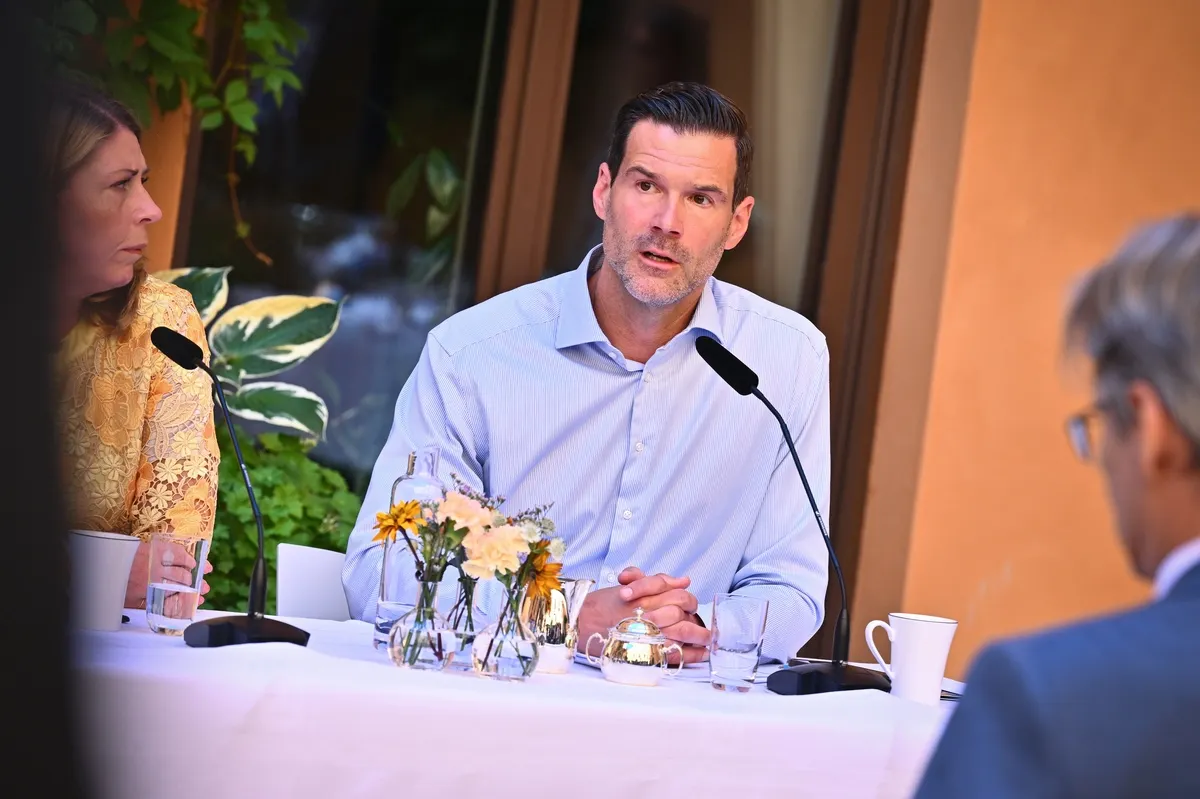
Last week our Nordic editor, Richard Orange, met with Swedish Migration Minister Johan Forssell at a fika briefing for the press in Almedalen. It wasn’t meant to be an interview – it wasn’t that kind of event – but he was one of few journalists there and he managed to chat for a while, fairly informally, with Forssell and then wrote it up as an interview for The Local.
It was one of our most read articles and when I asked newsletter readers if they wanted more interviews with politicians, the majority said they did. But some commenters accused us of doing a softball interview with the minister whose portfolio affects their lives the most – and in a year when some particularly tough immigration laws have upended the lives of many foreigners in Sweden.
We understand those views. In the case of this interview, we felt that, as the journalists who have perhaps asked Forssell more hardball questions than any other journalists in Sweden in recent months, we had reached a dead end with him. All our questions about retroactive citizenship reforms, teen deportations and the breakdown of the pairing agreement had yielded nothing but the same old soundbites.
Sure, we could have asked him more about why his coalition doesn’t seem to care that one of their own decided to go it alone and, frankly, cheat their way to a victory on transitional rules, despite it being blatantly against the spirit of the Tidö coalition agreement.
We could have asked him, again, about why he talks about attracting foreign talent and then decides to pull the rug out from underneath the hundred thousand people in the citizenship queue.
But we have asked him that. And we have asked him and other party representatives all those questions numerous times. Our thinking this time was that we’d try to get something out of him other than the same canned answers.
Hardball interviews are important, of course, but the downside of hardball questions is that politicians expect them. They’re trained to answer them. They already have their messaging ready and you can go back and forth without anyone really learning anything.
Johan Forssell is a politician we have chased a lot at The Local, and we’ve also been quite frustrated with the lack of substantive responses to the concerns of foreign residents on which we’ve pressed him. This time we decided to try a different tack. The advantage of a softball interview is that it puts the interviewee at ease and lets them explain their reasoning, sometimes even tricking them into saying more than they intended from the start.
We did learn a few things from this particular softball interview. Richard got him to concede that he isn’t really interested in pursuing the Sweden Democrat policy of stripping refugees of existing permanent residency, or in the idea of overseas return hubs – issues on which he hasn’t really spoken in depth beyond non-committal soundbites.
I suspect it was partly the bit where Forssell spoke about how hard he’s been working and the “abuse” he takes that left some readers with an unpleasant taste in their mouths. Forssell has been responsible for pushing through some of the most hardline immigration policies in recent years – policies that have had a huge impact on the lives of many of The Local’s readers as well as on our staff members – often without having to be particularly accountable to the people whose lives those policies most directly affect. We’ve complained on many occasions, for example, about the Swedish media’s failure to shine a light on how his government’s migration policies really affect foreigners. And now he’s patting himself on the back?
He said a few things that I can imagine were downright offensive to those whose lives are profoundly – and negatively – affected by the laws Forssell has pushed through. Many readers have felt he’s done this while characterising them as criminals.
It’s not surprising that some of what he said made people angry. But we didn’t expect that the anger would get directed at us.
Putting someone’s quotes in an article isn’t the same as the journalist saying they agree with them – and certainly not in this case. It’s a way to offer readers an opportunity to agree or disagree, to be outraged, angry, happy, sad or furious, and to have a record of what that person actually thinks – which could later on be used for accountability interviews.
Say, for example, that Forssell in the future comes out strongly in favour of stripping refugees of permanent residency. Then we can go back to his comments in this interview and show that as recently as 2026, that’s not what he thought.
Most of the time our job as journalists is to press a person in power and hold them to account; sometimes it’s to let a person in power talk and see what comes out.
But what we should have done is include more context in the article – about the policies Forssell has been criticised for and about the questions we have pushed to have him answer in the past, to no avail.
We work hard to have close ties with our members here at The Local. Many are returning commenters or emailers, we know them by name and they refer to our journalists by their first names. We think of you all as friends, in a way, even though most of us have never met.
And that’s maybe where we went wrong. We assumed that everyone would know us well enough to know how many times we’ve put difficult questions to Forssell, and that everyone would instinctively know the editorial stance of a news site writing for foreigners in Sweden.
Thanks to those who got in touch with thoughtful criticism. We have listened – we always do, even when we disagree – and have added more context to the article. We hear you on the impact the framing and tone had on many readers, and we will not forget about it the next time we set out to do something similar.
We remain journalists. Our job is to ask relevant questions, hard or soft, but it’s not to decide how we or anyone else should feel about the answers we get. It’s also our job to show issues and decision-makers from various angles.
Although The Local came out strongly in favour of transitional rules for citizenship, we actually rarely take a firm stance on political issues. Our readers aren’t one grey mass of people who all think the same thing, so we’re not going to tell you, for example, which party to support in the upcoming Swedish election. That’s for you to decide.
What is important for us is raising our readers’ voices. We think foreigners should be heard on the issues that matter to them. So that’s what we’re going to continue to do. And once in a while, we’re going to hear a politician out too, and show you what they had to say – even if what they have to say is quite distasteful to many.
But for now, let’s have a think about future hardball questions.
What else have we been writing about this week?
July 1st is when a lot of laws come into force in Sweden, so this week we did a roundup of ten new laws coming into effect over the next few months. We also reminded readers that they can, from now until through November 30th, get half-price monthly public transit passes.
We also wrote about the teen deportation relief measures law being submitted to parliament, warned readers to watch out for unreasonably high electricity grid charges on their bills, and reported new figures by the Swedish Job Security Council that show a promising picture for white-collar job seekers in Sweden.
That's all for this week. Trevlig helg!
Emma