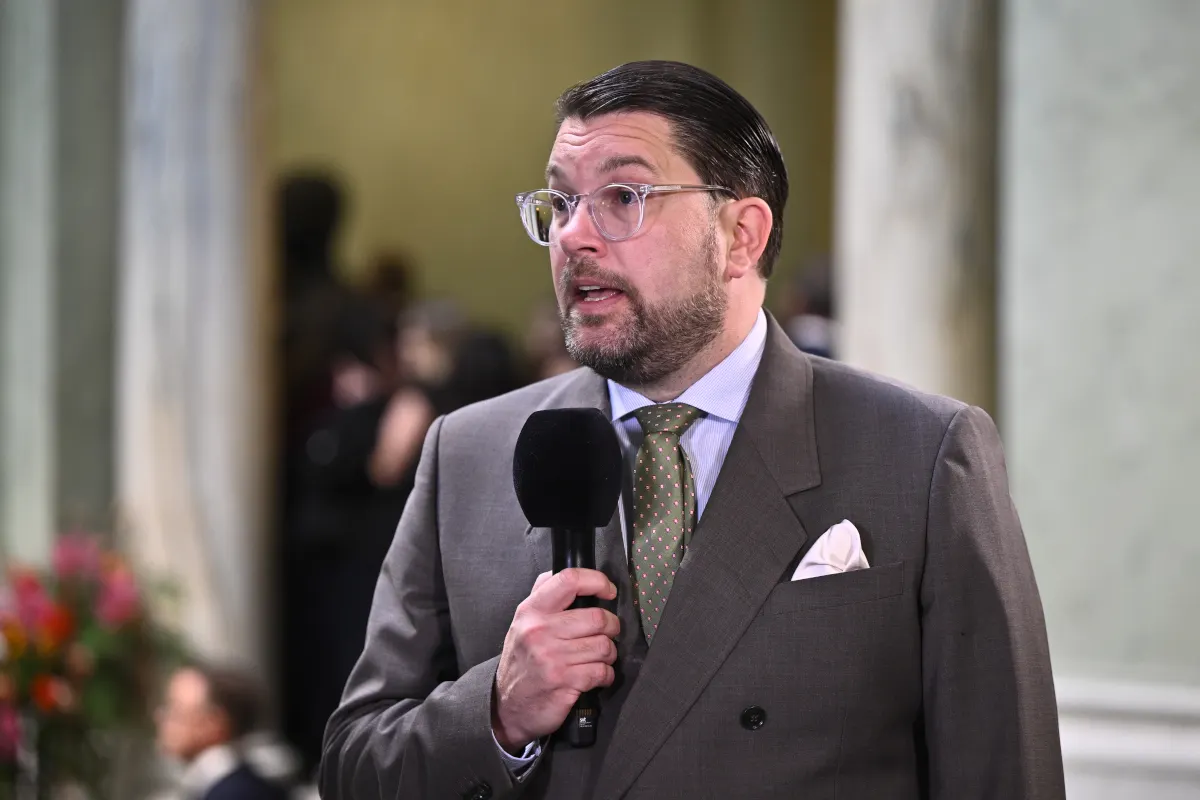
Åkesson staked his ground following a public spat between two senior members of the anti-immigration party, Mattias Karlsson and Richard Jomshof.
In an opinion piece in the Expressen newspaper, he writes that anyone who believes "ethnicity defines Swedishness will get nowhere".
He stresses that the party's official position remains "open Swedishness". Under this doctrine, anyone can become Swedish as long as they learn the language, embrace Swedish culture and core values, and identify as Swedish, regardless of their country of birth or their parents' heritage.
"Anyone who disagrees can either leave or start a blog," he writes.
The dispute kicked off on October 9th when MP and former party secretary Richard Jomshof posted on X that people must "dare to acknowledge" the significance of biological ties to national cohesion. Mattias Karlsson, a long-time member of Åkesson's inner circle, pushed back, warning against ditching open Swedishness in favour of an ethnonationalist path.
Jomshof and Karlsson, alongside Åkesson and MP Björn Söder, are part of the so-called "gang of four" who took over the far-right Sweden Democrats in 2005 and reformed the party.
Åkesson notes that he has seen the party grow from an essentially fringe political movement into one of Sweden's dominant political forces. This success, he argues, stems from "political acumen, a careful balance between demands and concessions, and, above all, a clear distinction between what is politics and what is not".
"Against that backdrop, it is exceptionally galling when self-centred, self-appointed ideological guardians moralise over this, believing themselves to be both superior and wiser," he writes.
He also takes aim at politicians he accused of indulging in "general philosophising and spouting off hot air".
Concluding his column, Åkesson writes that while the party should tolerate broad debate and open discussions, it must ultimately function as a serious political party with a clear ideological foundation and representatives who understand their brief.
"Openness does not mean that every personal opinion can be elevated to party policy, just as pragmatism does not mean abandoning our core values," he writes.