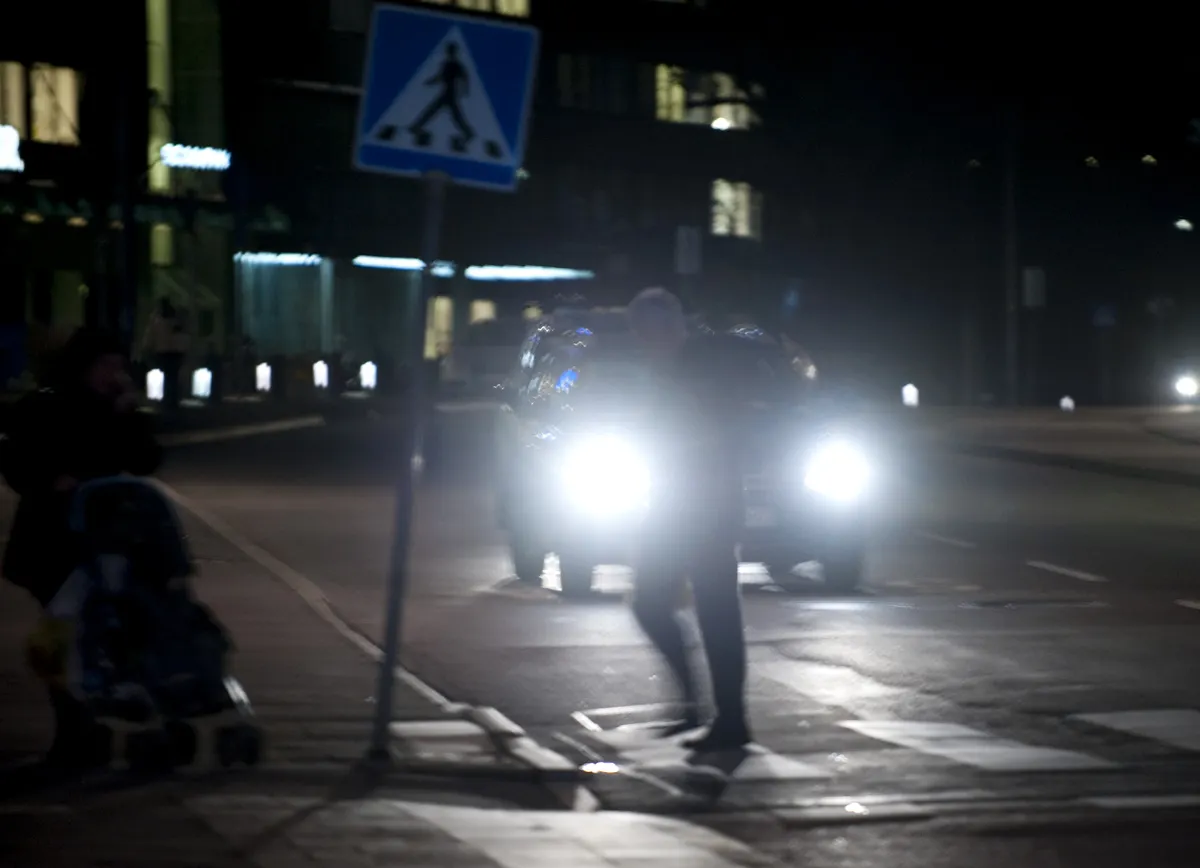
From October onwards, a walk or bike ride along residential streets, suburban paths or country roads in Sweden often involves navigating near-total darkness. Even in urban areas with plenty of streetlights, it's often so dark by mid-afternoon that pedestrians and cyclists can be quite hard for drivers to see.
Because of this, it's common to see both adults and children wearing small hanging clear plastic discs or snapping bands around their wrists and ankles. These are called reflectors (reflexer in Swedish) and they are an important tool for pedestrians to make themselves visible in the dark times of year.
A matter of seconds
The main reason to wear a reflector comes down to the laws of physics and reaction times.
According to Swedish road safety organisation NTF (Nationella trafiksäkerhetsförbundet), a pedestrian wearing dark clothing can be seen by a driver of a car, via the car headlights, at about 20-30 metres away. This gives the driver about two seconds to react.
A pedestrian wearing a reflector, NTF writes, can be seen by the driver of a vehicle at a distance of approximately 125 metres – allowing for a comparably longer reaction time.
This difference becomes crucial during Sweden's long wintertime. Wet roads, black ice, and packed snow all make it harder for cars to stop quickly. Those extra seconds of warning can mean the difference between a close call and a serious accident.
The false security of streetlights
Many pedestrians may assume that streetlights provide all the illumination necessary for them to be seen by vehicle drivers. However, this isn't true.
According to NTF: "In urban traffic, it is even more important to wear reflectors, despite neon signs and streetlights. Most accidents involving pedestrians occur in densely populated areas with street lighting."
This happens because the combination of shop displays, streetlights, and oncoming headlights creates visual clutter for drivers, so pedestrians (who often wear dark autumn or winter clothes) blend into the background and appear almost invisible to drivers until the very last moment.
How to wear reflectors effectively
To get the most protection, specialists advise against relying on a single reflector. Instead, you should make a habit of attaching reflectors to all your everyday coats, backpacks, and handbags so you are never caught unprepared.
You should use at least two reflectors, one on your left side and one on your right, so drivers can see you clearly from any direction.
Where and how you place your reflectors also matters. Hanging reflectors that swing as you walk catch a driver's attention much faster than, for example, reflective logos sewn onto a coat.
Reflectors should also ideally hang at knee or hip height. Since car headlights point down towards the road, a low-hanging reflector catches the light much sooner than one placed higher up.
Finally, if you jog, cycle, or travel along rural roads, you will need extra protection, so high-visibility safety vests or diagonal reflective sashes are your safest bet.
Which one should I buy?
NTF advises checking reflectors for an official European CE mark and a high CIL (reflectivity measure) value.
A CIL value of 400, they write, provides visibility at more than 140 metre-distance for two cars approaching in opposite directions (so, with passing headlights).
If you're cycling, check that the reflectors mounted on your bike are up to code. The Swedish Transport Authority has a page outlining which identifying marks you should be looking for.
Where to get them
You can buy reflectors at a lot of stores in Sweden, especially at this time of year. Sports stores and pharmacies are particularly safe bets.
Just make sure to check for the certification standard marks given above; some reflectors can be more gimmicky than useful.
Can reflectors expire?
Hard plastic reflectors, adhesive tapes, and slap-wrap bands don't have an expiration date, but dirt, scuffs, and scratches can reduce how well they work and reflect light.
If you have been carrying yours for several seasons, it has probably lost much of its reflective power, and you should consider replacing it.
Heavily used reflective vests should be replaced every two to three years, regardless of how often they have been washed, as sunlight, rain, and grit wear down the fabric over time. According to Norwegian road safety organisation Trygg Trafikk, most vests lose much of their reflective strength after about 20 machine washes.
If you're not sure whether an old reflector still works for the dark autumn and winter months, it's easy to test it at home.
Take the reflector into a dark room, hold a flashlight or your phone's light at eye level to mimic a driver's view, and shine it directly at the reflector from a few metres away. A good reflector will immediately bounce back a bright glare.
For the best comparison, place your old reflector next to a new, certified one. If the old one looks dim or dull compared to the new one, it's time to toss the old one.
The adult blind spot
Since parents are usually diligent about ensuring their small children wear reflectors – and, in Sweden, winter outerwear clothing for children almost always comes with built-in reflectors – adults can be under the mistaken impression that reflectors are just for kids.
But adult pedestrians without reflectors can be hit by cars in the darkness just as easily – particularly since adults often wear dark coats and trousers in winter.
Because adults can be especially negligent when it comes to reflector use, Trygg Trafikk (the Norwegian road safety organisation) now has an ad campaign about reflectors targeted towards grownups.
It's in Norwegian, but you don't need to understand anything they're saying to get the message:
Stay bright, stay safe.