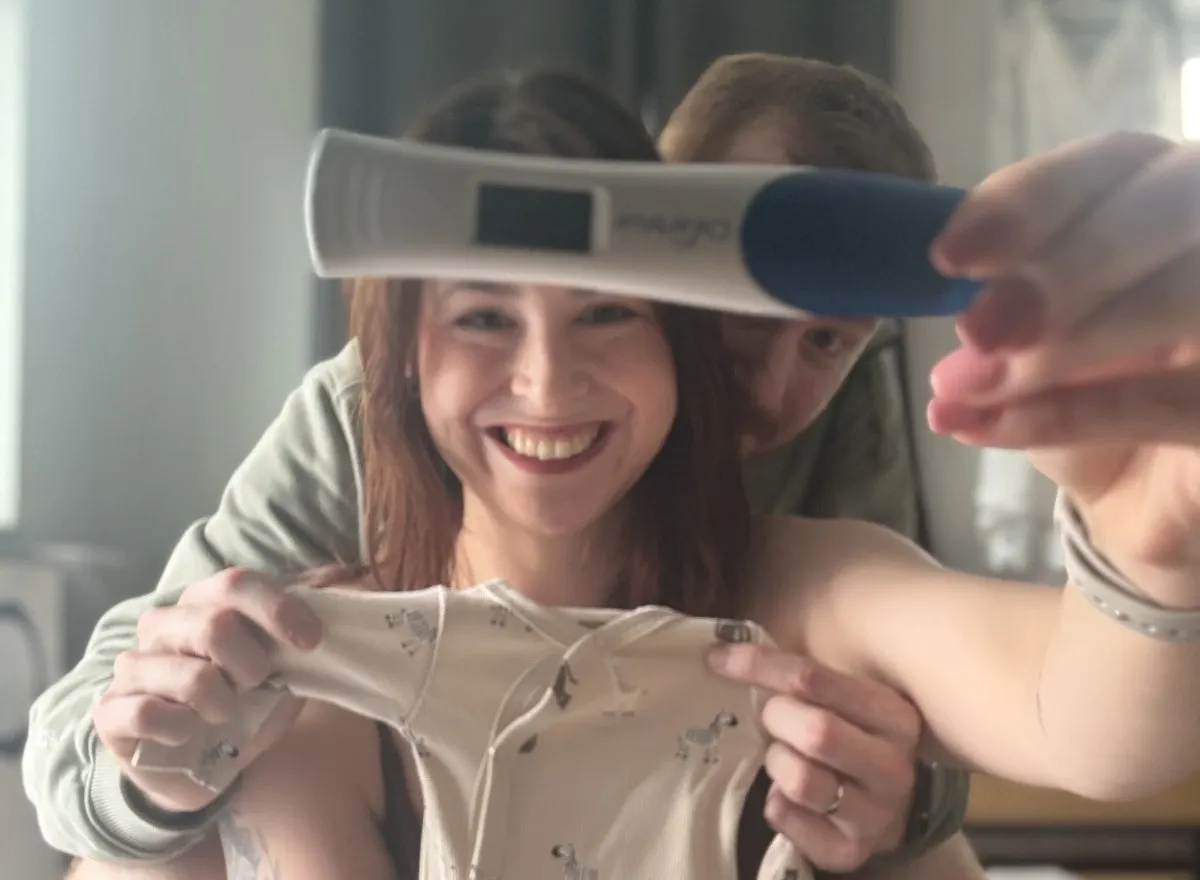
The former Northvolt worker Brenda Ramström is now back in Curitiba, Brazil, three days into a separation from her Swedish husband the duration of which neither can know – and she's 21 weeks pregnant.
As Brenda told Emma Löfgren in an interview published this week and put out as a podcast, it is "really hard" to be pregnant without him, and to unexpectedly be outside Sweden. "My plan was to have my baby here and now I have to do everything again when I arrive in Brazil."
She had to leave Sweden this week after the Migration Court rejected her appeal, ruling that her marriage and pregnancy did not constitute sufficiently strong ties to exempt her from the requirement to be outside Sweden when applying for a residence permit to live with her spouse. As a general rule, non-EU citizens can't apply for a residency permit from inside Sweden.
She is far from the only case.
Similar decisions on permit changes affect hundreds, if not thousands, of foreign couples and families every year. Only in July, we covered the cases of the American biosecurity researcher Chris Stamper, who had to return to the US to switch the grounds of his residency in Sweden from a work permit to a spouse permit (again, having a wife, house, and job in Sweden didn't count as "strong ties"). We also covered the case of Paola Claudio, the Mexican 19-year-old who had to take a gargantuan round-trip to Mexico to shift from a permit as a family dependent to a student permit.
It doesn't have to be this way.
My colleagues at The Local France and The Local Germany tell me that legal residents there can normally change from a work or study permit to a family-based permit without leaving. Finland explicitly allows people with work or study permits to apply on new family grounds, while Denmark allows legally resident workers and students to submit family-reunification applications from within the country. Norway retains a general rule requiring applications from abroad, but makes exceptions for people who already hold valid residence permits.
None of these countries suffers major problems as a result, so why is Sweden so strict? Sweden has already made it easier to switch from a work permit to a research permit or a permit to set up a business, and this month it made it easier for young adults like Paola to switch from a family permit to a study or work permit.
The Green Party already wants people on work permits to be allowed to apply for family permits from within Sweden in situations where their family is already established, but it's not something even they are actively campaigning on now. Isn't it time to get it on the agenda and bring Sweden in line with its neighbours?
Migration news
The results of Sweden's first civics test for citizenship are in, with about 80 percent of participants passing.
As part of The Local editor Emma Löfgren's work with The Fix, a media consultancy and research group, we published an article this week based on an analysis of tens of thousands of articles in Sweden's newspapers on the so-called 'paradigm shift on migration' imposed by the Tidö Parties over the past four years, using their AI-based system. It is striking how the Swedish media have largely ignored both the unfair citizenship reforms, and the way they were brought in without transitional rules, and the stricter work permits. The focus has almost all been on deportations and asylum.
You can hear Emma and Mandy Pipher discuss this, and much more – including Mandy's exasperation at the way Swedes celebrate Halloween – in this week's Sweden in Focus podcast.
The four centre-left parties in Sweden's new parliament agreed on their solution to the problem of teen deportations.
The Migration Agency came to the rescue of 19 Filipino electrical engineers who were seized during a well-publicised raid at SSAB's steel plant in Oxelösund, overturning a police deportation order and Schengen ban. This meant the workers were released from the detention centres where they had been held. The Migration Agency lawyer who made the decision, Sara Isman, explained to us why she had interpreted Swedish and EU law on posted workers differently from the police.
What else have we been writing about?
The painful process of negotiating Sweden's government inched forward this week. The speaker of Sweden's parliament invited Centre Party leader Elisabeth Thand Ringqvist to try and put together a coalition of 'centre parties' willing to support Magdalena Andersson as prime minister. Sweden Democrat leader Jimmie Åkesson asked for a 'no-strings-attached' meeting, which he got. The leader of the Liberal Party, which would be needed for Thand Ringqvist's coalition, vowed to block it.
Ulf Kristersson's childhood friend Henrik Landerholm was found guilty of 'negligence with classified information' after prosecutors successfully appealed his exoneration by a lower court.
Volvo announced plans to cut the number of people employed in Sweden by 2,000.
It was Sweden's Högskoleprovet this week, the test people take to supplement their grades when applying for university. See if you can do better than Mandy and I did in the podcast on the Swedish vocabulary section.
Foreign researchers told us what they love and hate about working in universities in Sweden, with many praising the relaxed, flexible, and relatively low-stress working environment, a culture of cooperation over competition, work-life balance, and opportunities for high-quality research work.
We also published a new survey asking people about their experiences building or renovating houses in Sweden. Tell us about your own dream project here, even if it's turned into a total nightmare.
Finally, there's chaos at Copenhagen airport, which is bad news for me as I'll be going there this afternoon for a höstlov trip to Granada in Spain.
Have a lovely weekend!
Richard