In Sweden's public discourse it's usually referred to as a "paradigm shift" on immigration, but for those of us directly affected, it can feel more like racing frantically around trying to catch new things being randomly shot out at us from one of those t-shirt launchers – if the t-shirts weren't free and also contained the basic right to keep living the lives we've been building in this country.
In such a context, keeping track of rapidly changing and complex immigration law changes in Sweden is as anxiety-inducing as it is necessary. For me, whose job it is to report and explain those changes to other foreigners in Sweden, while still on temporary permits myself, the sense of being rather under siege can, at times, threaten to overwhelm.
On the bad days, this means that the regular immigration policy news coming out of Stockholm combined with the most recent deportation stories we've been covering at The Local can congeal into a heavy film over my eyes, one which affects how I move through my daily Swedish life. I've always found Umeå, where I live, to be a calm, peaceful, welcoming place (well...welcoming in a passive Swedish way!), but on those bad days, that heavy film gets between me and the real place where I live.
It's not like I start walking around suspecting every blonde blue-eyed person I pass of being a Sweden Democrat voter. It's more like the regular world seems overall darker, heavier, more hostile. It's like a dim spectre of racially-charged venom and xenophobia starts hovering in the very air.
But on lighter days, or when I have the wherewithal (and energy) to blow that spectre out of the air, I realize that the immediate community around me is as it always was.
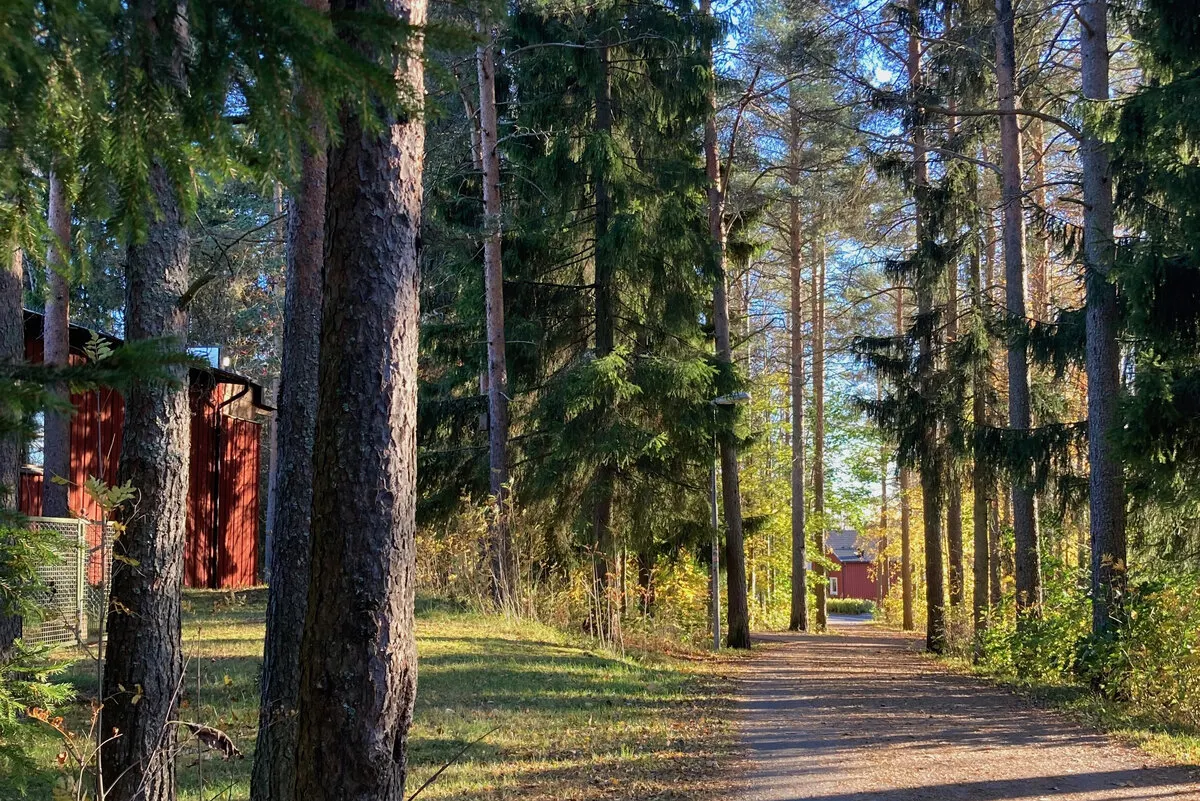
The walk to my daughter's preschool features trees, cute colourful houses, and more bicycles than cars. At the preschool itself, I am greeted by the wonderful staff, who chat calmly and wisely with me about my child's day – or about the weather. They are patient with my Swedish and treat the diverse children in their care with warm attention and respect. My daughter is usually busy running away from me, into the rambling forest they have on the grounds, yelling over her shoulder that she doesn't want to go home yet.
Back at our apartment, I exchange a few words with my neighbours as they, too, are arriving back from collecting their kids. The reserved Swedish way of interacting can feel remote, but I find that once I get a bit past the taciturn exterior, there's often a gentle, respectful warmth – and a good-natured, matter-of-fact attitude to life that, along with a dark sense of humour seems to me like a pretty great way of dealing with the world.
I feel at home here – here, in my neighbourhood, and in my adopted city. And I'm determined that no amount of dog-whistle political posters featuring a cartoon bee and a certain party leader hanging out of a car is going to change that.
What have we been writing about this week?
Sweden's government-formation process is (sort of) dribbling slowly along, as the four centre-left parties met together in person for the first time since the September 13th election.
We did more digging into the previous government's family immigration bill that became law on October 1st, publishing a Q&A explainer on how it will affect researchers, and an interview with a lawyer about how the law may create a new type of teen deportation case.
Speaking of teen deportations, the centre-left parties this week put forward their first joint motion: to halt all 'teen deportation' cases until the issue can be comprehensively dealt with.
And an AI consultant named Anna Bärlund has successfully appealed her Swedish citizenship rejection.
We also wrote about our reader survey on what you miss from home – and Richard and I talked about our own 'misses' on this week's Sweden in Focus.
Want to relax with some games on the weekend? The Local's got you covered: find the Swedish word in WordroW and crack the daily sudoku with The Local Games.
That's it for now!
Trevlig helg,
Mandy