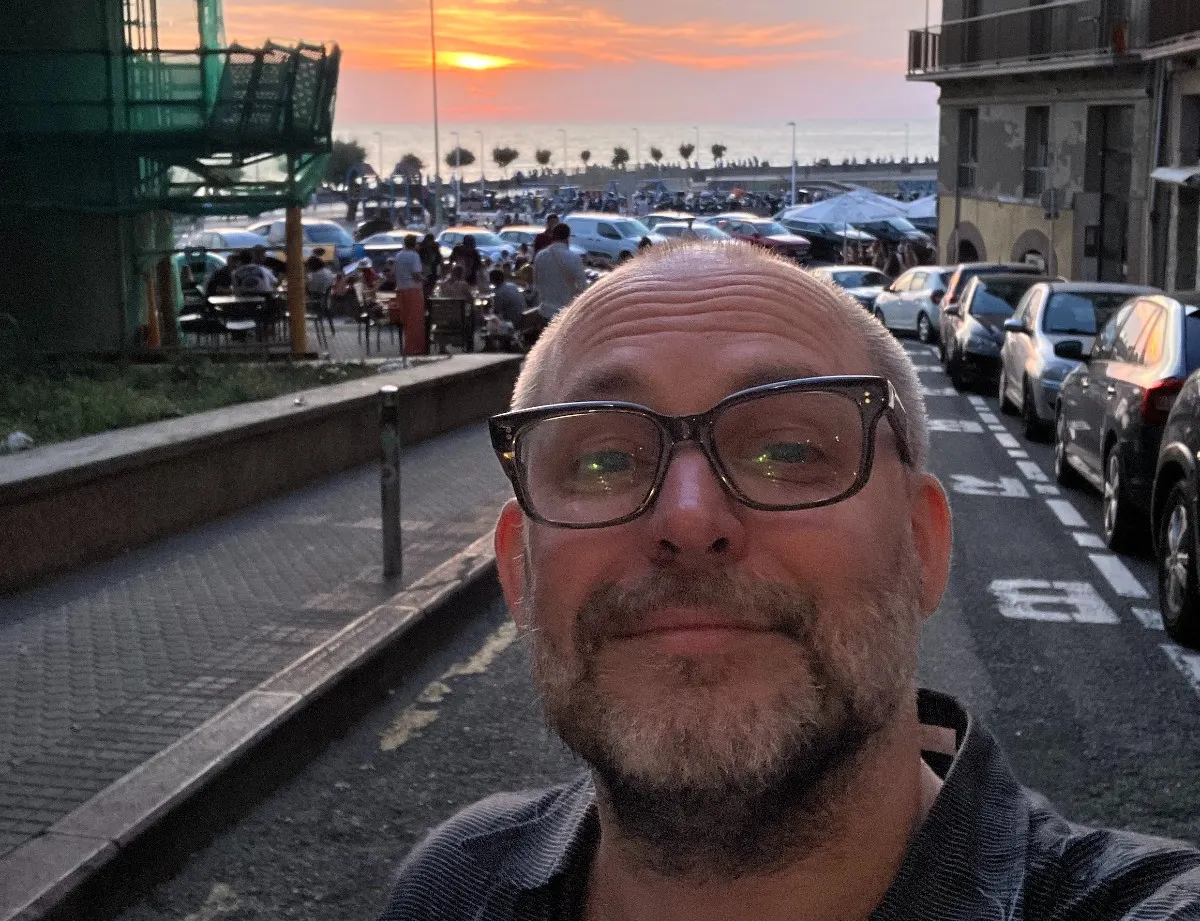
"I did move here for love, but I also knew that I would have more of a chance of doing what I of dreamed of doing if I moved here than I would have had in London, " he tells The Local.
He'd been working as a waiter at St John Restaurant, known as a pioneer of 'nose-to-tail eating', but had also done a bit of DJing and booked a couple of bands in London.
"I would come over and visit my partner at the time and got a sense of the scene and realised that I could probably get paid to DJ more often here and maybe book more gigs than I could in London. I realised I was one in thousands in London, but maybe one in a hundred here and I would probably quickly get to know most of them straight off the boat."
When he arrived that is exactly what happened.
"It didn't hurt that I could say I was a booker and DJ from London – in speech marks because I wasn't really," he laughs. "But it was enough to get my foot in the door."
Even though in the UK, he'd mainly been involved in electronic music, breakbeat and what he calls Game Boy music, in Stockholm he started booking krautrock and post-punk bands, starting with a festival at Teater Moment in Gubbängen.
"I went in there, and it looked very Lynchian – these big red curtains and this black and white chequered floor, and it was a beautiful venue. And I somehow talked them into letting me book the only four bands that I knew, and put on like a mini festival," he remembers.
"It had visual projections and I had some art involved and some DJs, and somehow I sold 250 tickets or something at this suburban old theatre, and I was rolling."
He did another festival three months later and they both got a surprising amount of press and soon he was booking gigs all over Stockholm in "tiny bars above restaurants or art gallery basements or wherever, really".
Once he got going, someone told him he could also get subsidised by Stockholm's city government.
"I went and had a meeting with them and like basically dumped a bunch of posters on their desk and said, 'I can't keep doing this unless you help me out', and they were like, 'well, of course we will', and I guess I had the right person at at the culture office there, who trusted what I was trying to do and and helped give me money to put on these gigs, and then I was truly away."
Between 2008 and 2015, he estimates, he booked 371 bands at different Stockholm venues. Just when he was planning to stop and do something different with his life, Eric Birath, one of his friends and contacts was appointed to head Fasching, Stockholm's most important jazz venue, and later hired him as a booker.
"Bit by bit, I got a bit more involved in Fasching, and then eventually I started working there. So I stopped retiring from booking and became a booker again in 2017," he says. "That's nearly 10 years ago, and from there, bit by bit, I got more involved in the Stockholm Jazz Festival. I've been full time for nearly four years."
This year, he says, he's most excited by the sell-out gig for 1900, the solo project of Christian Gabel, the former drummer for the band Bob Hund, and a performance by the British drummer and vocalist Momoko Gill, both on October 9th.
He also tips the French Mongolian singer Céline Dessberg, and a double bill from the Swedish jazz band Langendorf United and the Leeds based jazz band The Sorcerers, both of whom are influenced by Ethio Jazz.
Looking back, Gavin makes it sound like he just fell on his feet, but he says breaking into what can be quite a closed cliquey scene took a lot of perseverance, something be believes is probably necessary for any foreigner establishing themselves in Sweden, particularly in the cultural world.
"Keep on keeping on, like be a bit insistent. Have a bit of a thick skin. and persevere, because in Sweden, its famously hard to get into their groups and their cliques and their scenes and their friendship groups."
He remembers turning up the Södermalm café Louis Louis and offering to DJ, while he still lived in London.
I said, 'hi, I heard you have DJs. Can I like play?', and they were like, 'Oh, well, we just kind of just have friends play a bit here, but you should go and check this place out and this place'. And they drew me this little weird map of these places nearby.
But I had a good vibe with them, and I really liked the space, so the next time I was in town, I went in there and said, 'Oh hey, I popped in here before, and he said, 'You only had like friends DJ for like lunch and stuff. That sounds fine.' They were like, 'Oh'.
'I'm like basically saying, 'I'm your friend now', and they couldn't really say no. So they they gave me a gig, maybe slightly reluctantly."
That, he said, led to him meeting and becoming friends with people who would become key to his booking career, including the first band he managed. "It opened up a lot of doors to me and it became a bit of a home from home. So I guess perseverance and a thick skin, and just having faith in it all working out in the end, even if you're met with coldness, is probably my main advice."
After 18 years in Stockholm, Gavin is still reluctant to say he's here for good, something he attributes to his peripatetic army brat childhood, with frequent moves ever since he was born in in a British military hospital in West Germany.
"I've moved so much, that it didn't feel like I was emigrating. It just felt like, 'oh, my girlfriend's there. I'm going to move there', and I'm going to bring all my stuff because I think it's going to work out. Everyone thought it was very bold and brave, but it felt very normal to me because I'd done it a lot when I was a kid, and now 20 years apparently has passed, and it's the longest I've lived anywhere."