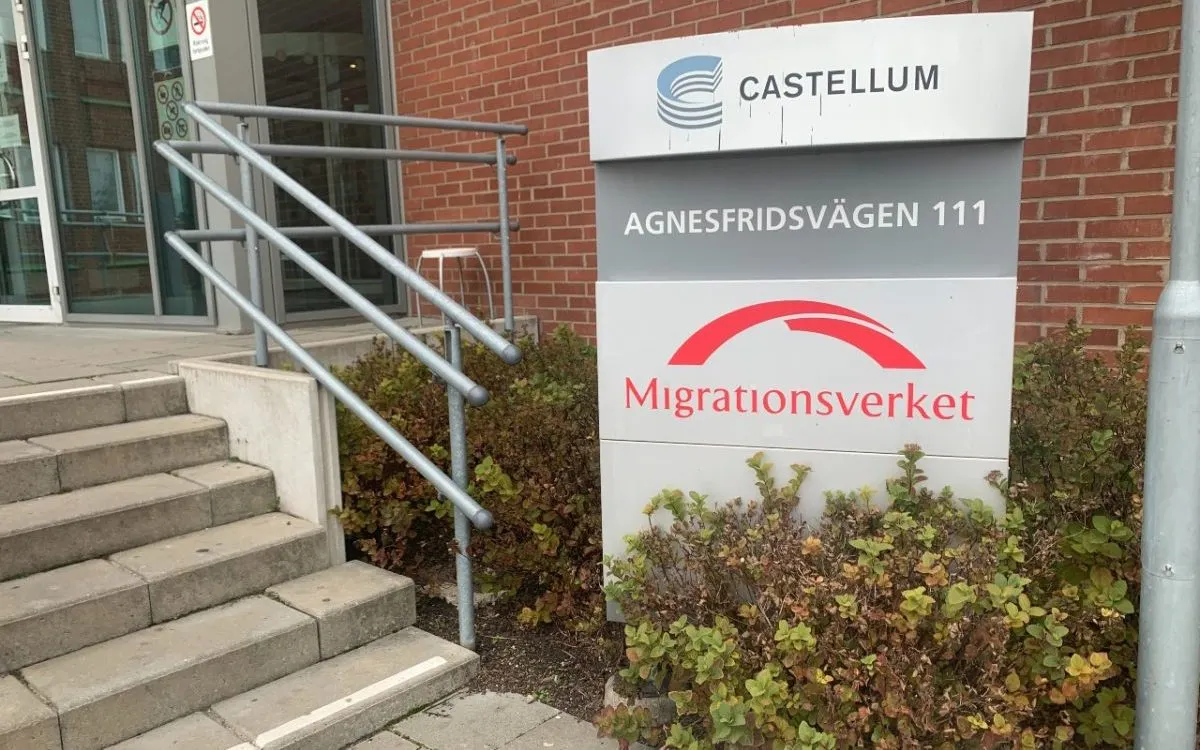
It's an almost impossible task. The Migration Agency's 6,000 employees make decisions on well over 100,000 cases every year. Each of those cases involve people with unique circumstances generating new legal issues. At the same time, migration law in Sweden has been changing at a dizzying pace, as national governments tighten the rules for work permits, citizenship, family reunion and asylum, and EU directives come into force.
The UK Withdrawal Agreement was a particular challenge, as it required the agency to apply EU rules for residency for almost the first time. Even today, EU citizens do not need to have any contact with the Migration Agency to get a personal number, but instead register directly with the Swedish Tax Agency.
So you would expect mistakes to be made. But despite the unusually high number of British citizens Sweden has rejected for post-Brexit residency, the agency has repeatedly insisted that it has been applying the law correctly.
To get a better understanding of how the agency has been applying the law, we managed to get an interview earlier this month with its legal chief, Susanna Fonsell.
It wasn't her first language and our questioning could have been clearer, but when we shared the transcript with three prominent experts in EU law, they agreed nonetheless that she appeared to misunderstand key aspects of EU law as applied to the UK Withdrawal Agreement, including the proportionality rule, residency, income and employment requirements. You can read our interview here.
Migration news
Strict new rules for family reunion came into force on Wednesday, which also brought in the government's solution to the deportations of teenagers and young adults.
Our reporter Mandy Pipher carried out a long interview with Ann-Kari Olsson, Section Head at the Swedish Migration Agency, to find out who is affected – and how. We published it in full as a Q&A.
As soon as the parliament opened the Green Party launched a special 'independent motion' calling for a much more thoroughgoing solution to the teen deportation issue. The Migration Agency on Wednesday also announced that it was resuming the processing of teen deportation cases, which it put on hold in March when the government announced its plans.
On citizenship, Sweden's Migration Court of Appeal said it was on the look-out of a suitable case to grant leave to appeal so that the new stricter citizenship law can be tested at the highest level.
Meanwhile the Swedish Council of Higher Education said the planned language tests for citizenship would now not be held until 2029, three years later than the government originally hoped.
Forming Sweden's next government
This week's news was dominated by drama over the process of building Sweden's next government. Social Democrat leader Magdalena Andersson abandoned her role as sonderingsperson, the person responsible for building a coalition, on Monday after the Left Party voted for Moderate MP Andreas Norlén to return as Speaker, rejecting the Social Democrat candidate. We wrote a quick analysis of what she was trying to do.
In the end on Friday, Norlén reappointed Andersson sonderingsperson, and the Centre Party invited the Left Party, Green Party and Social Democrats to a meeting with "external actors" to discuss what policies a new joint government could have.
You can hear us discuss the political machinations in this week's Sweden in Focus podcast.
What else have we been writing about?
Finally, we want to know what it is about home that you miss doing now you're living in Sweden. Tell us in the survey here.