Hej,
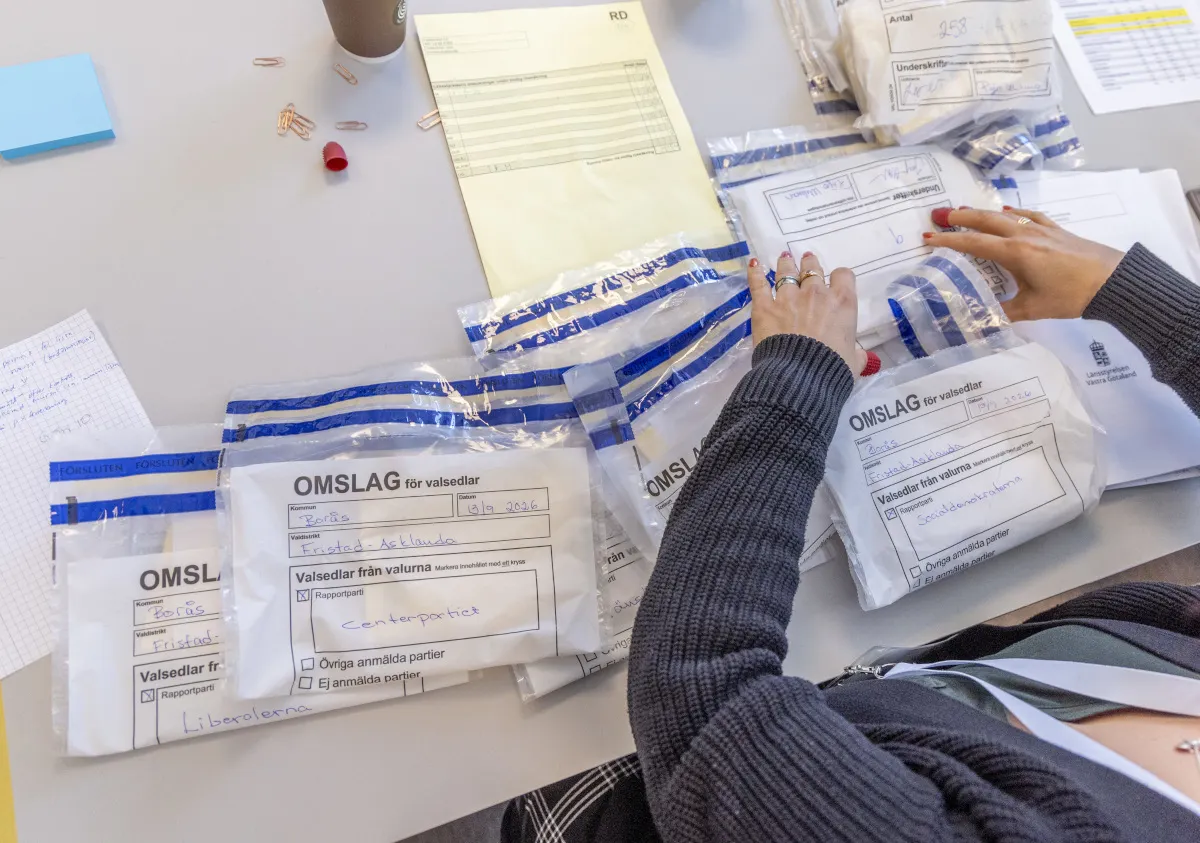
There’s been quite a lot of talk about alleged election fraud in Sweden in the past week, after an incident in Dalarna brought the concept to the forefront of everyone’s minds.
Here’s what we know so far.
By Friday morning, the Election Review Board had received more than 11,000 emails containing election result appeals, a large portion of which relates to the investigation in the Dalarna region. It’s important to know that any eligible voter or party is allowed to appeal the election result, so many are about the same incidents, not 11,000 different incidents.
The Swedish police have received around 60 reports concerning undue influence in voting. These range from stolen ballots to people trying to convince others to vote a certain way in the queue to the polling station (parties are not allowed to campaign immediately outside a polling station). According to police, not all of the reports concern actually illegal activities.
According to the anti-corruption unit at the Swedish Prosecution Authority, six active cases were under investigation under this legal classification as of Friday morning.
What’s going on in Borlänge?
There’s an ongoing investigation linked to the Left Party and local politician Mohamed Abdukardir Ali, who secured 648 personal preference votes during the election, taking Dalarna’s sole parliamentary seat for the Left Party. In Sweden you can vote for a party only, but you can also tick the name of your preferred candidate to give them an extra boost.
How rare is it to get 648 personal preference votes? On the whole, not very. Sweden Democrat leader Jimmie Åkesson, who received the most personal preference votes of anyone, got more than 300,000 such votes. But it’s rare for a relatively unknown politician.
How unknown is he? Well, he’s not at all unknown now! But before all of this, he was hardly among the party’s most high-profile figures. That said, he was apparently quite well-known in his specific area of Borlänge and was an active member of the Somali community there.
According to sources cited by multiple media outlets, the suspicions include allegations that voters were handed pre-marked ballots, that people were driven to the polling stations and possibly that money changed hands. Prosecutors have not officially confirmed this.
According to public broadcaster SVT, three individuals are currently suspected in the investigation. However, no one has (as of Friday afternoon, the time I’m writing this newsletter) yet been formally served with suspicion of a crime or taken into custody, and it is not known whether Ali himself is considered suspected of any foul play at all.
Ali himself denies any wrongdoing and said he was shocked by the allegations of electoral fraud, but in consultation with his party (or possibly with some pressure from his party), he has stepped back temporarily pending the probe and will request leave from the Riksdag.
Another Left Party politician, at the municipal level, who has also been linked to some of the allegations, has also taken a temporary step back until the investigation concludes.
Other notable post-election incidents
The TT newswire reports that Stockholm has filed a police report following an editorial in the SvD daily featuring anonymous allegations about the Left Party’s campaign in Järva.
In Landskrona, a Social Democrat politician reported the party’s top candidate in the municipal election to the police. According to the report, he handed out ballot papers where his own name had already been ticked. He apparently denies the allegations.
Police are also investigating two cases in Luleå and Piteå, where someone linked to the Sweden Democrats (who have strongly criticised the incident) offered on Facebook 300 kronor to “vote right for Sweden”. The post was circulated in buy-and-sell groups.
Is any of this illegal?
The rules around electoral fraud are actually unclear, so the police investigations will have to show, but in short you could say that it depends on exactly how it has been done.
Forcing someone to vote a certain way is of course not legal. Explicitly paying a voter for their vote would also be illegal. Driving voters to the polling stations, however, would not be a problem in a legal sense, according to law professor Joakim Nergelius.
Pre-marked ballots appear to be a grey area. In 2022, to take just one example, the Sweden Democrats were involved in an incident regarding pre-marked ballots, and that in the end was found to be inappropriate to be sure, but not electoral fraud or otherwise illegal.
Could Sweden re-run the election?
It’s definitely not going to re-run the entire national election.
It could conceivably re-run the Dalarna election (or other local elections) if it’s found that undue influence in voting did in fact occur. But that’s a last resort, and experts seem to agree that it’s very unlikely. There are plenty of other measures to take before a new election.
In other news
The results of our (highly unscientific) reader survey on how The Local’s readers voted in Sweden's election are in.
Until he was stopped by border police in Malmö on September 15th this year, Paul Hounam had absolutely no idea he should have applied for post-Brexit residency back in 2021. He could now be forcibly deported in 10 days with a four-year Schengen ban.
Prime minister Ulf Kristersson lost Sweden's election earlier this month, but until Magdalena Andersson manages to form a government, she hasn't won. The Local’s Richard Orange ran through nine possible coalitions with politics professors Jonas Hinnfors and Nicholas Aylott.
Sweden's Tidö government may have lost the 2026 election, but many of its strict immigration policies will become law this autumn. Here's what you need to know about the law restricting immigrant family reunification that comes into force on October 1st.
In an exclusive interview with The Local, Fredrik Löndahl, chief judge at the Malmö migration court, explained why his court gave special attention to a single citizenship rejection appeal, and why he believes the ruling will be tested again at the highest court.
The four Tidö parties behind Sweden's current government have lost the election and Ulf Kristersson has resigned as Prime Minister, so what needs to happen for Sweden to get a new leader?
And finally, new reunification rules for immigrant families, citizenship test results and maybe, just maybe, a new government are on the cards for Sweden in October 2026.
Thanks for reading,
Emma Löfgren
Editor, The Local Sweden