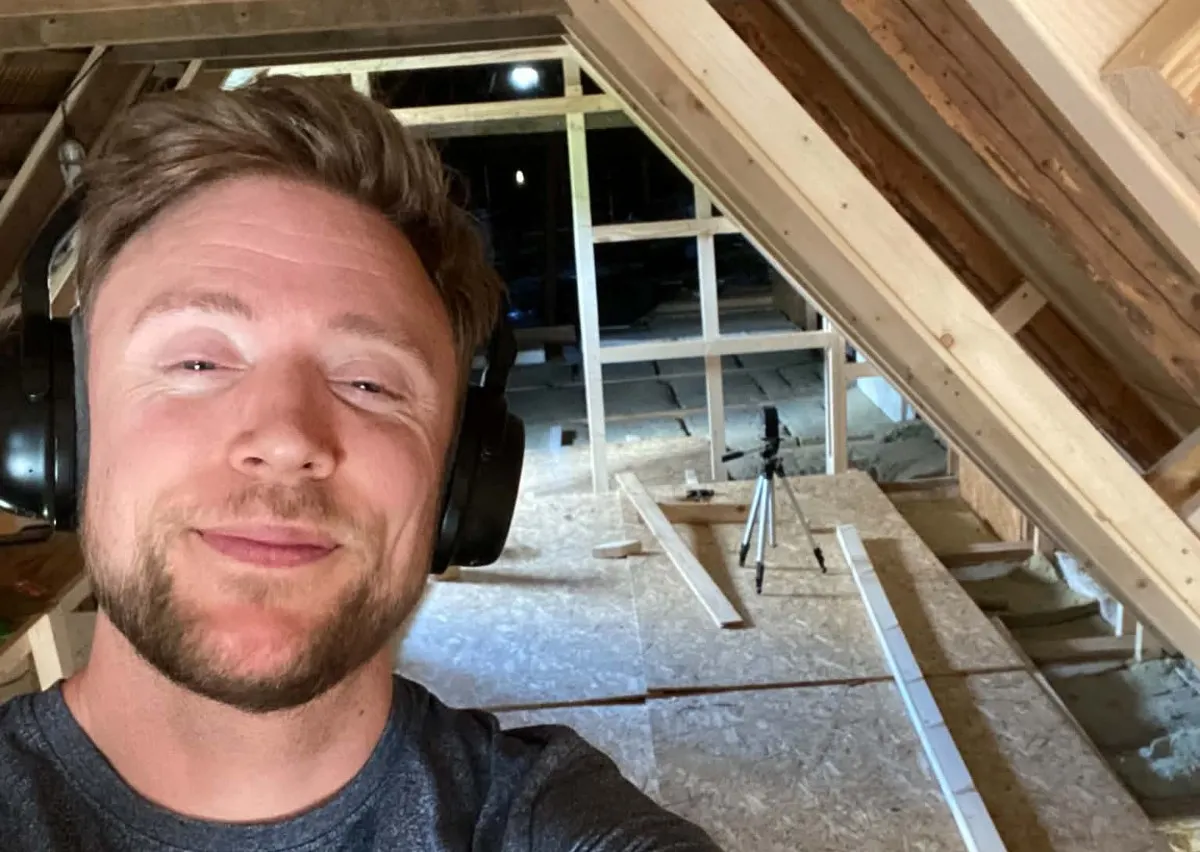
In the months leading up to the deadline for applying on December 31st 2021, Hounam remembers, he was either working flat-out as a farmer at Tosterup Castle in Skåne, or busy renovating the old farmhouse he had bought outside the town of Hörby.
"I was working in the orchard, and it was heavy manual labour: picking season was like seven days a week, 10 hours a day. And when I wasn't at work, I was working on my house," he remembers. "The news I was hearing was all about Covid-19. I didn't hear a sniff of anything about Brexit, or a deadline or a window for applying."
Hounam's case is yet more evidence that there could be hundreds more British citizens in Sweden who remain unaware, even now, more than six years after the UK left the European Union, that they have lost the right to live in what is now their home.
When applying the UK Withdrawal Agreement, Sweden gave British citizens already living in the country until December 31st 2026 to apply for post-Brexit residency, but unlike many other countries opted not to send letters to British citizens' homes informing them of the need to apply.
Sweden has already deported 458 British people after rejected residency applications, with an unknown number also deported after first having their residency application rejected, and then being refused a renewal of a subsequent work, spouse, sambo, or family reunion permit.
READ ALSO: What's causing Sweden's second wave of Brexit deportations?
Hounam came to Sweden in 2016 just as the Brexit referendum was taking place, and is now employed, earning a good wage, and living with his sambo (from samboende, meaning a partner you live with).
When he received permanent residence, long before Brexit happened, he believed that his right to stay in Sweden had been secured forever.
"I can vividly remember standing around the dining room table at my ex-sambo's parents' house, which was in Hudiksvall, and we all stood around the piece of paper and saw the word 'permanent' and thought, 'well, we've got what we wanted. You're here and you're here to stay.' So then, I wasn't worried about Brexit."
It didn't help that his ex-sambo's father, a British man who came to Sweden in the 1990s, believed they were both safe because they had permanent residency.
What they didn't realise is that, unlike Hounam's, his sambo's father's permit had been granted before Sweden joined the EU, meaning it survived Brexit, whereas Hounam's permanent residency rights disappeared when he ceased to be an EU citizen.
Hounam nonetheless managed to continue living in Sweden illegally for four and a half years, working, paying tax, and having a bank account, without realising he was in any trouble.
He was briefly concerned when he visited the Migration Agency to get a permanent residence card in 2024, and was told he was not in any of their systems, but he put this down to clerical error and poor communications between government agencies.
It was only on September 15th, when he was stopped by border police on his way back from a job furnishing the new offices for the Danish tech company Trustpilot in Copenhagen, that he discovered how serious the situation was.
The border guard took him in and told him he was not in the Migration Agency's systems, and unlike in previous situations where he had eventually been waved through, perhaps with a stamp on his passport, this time he was told he was living in Sweden illegally. When he contacted the Migration Agency, he was told they planned to issue him with a deportation order and also risked a four-year Schengen ban.
READ ALSO: 'Brexit can hardly have come as a surprise' – Sweden defends expelling Brits
While he is allowed to stay living in his house for now, he is required to report to the police station in Hörby every Monday.
"They think that I might be a flight risk, that I might try and run into the Swedish forest," he says.
His case officer has telephoned him to ask how much time he would need to pack his belongings before having to leave the country and he is still trying to find out how much baggage he can take. She has told him, he said, that she doesn't think it will be necessary to forcibly seize him or move him to a deportation centre before putting him on a plane.
The reason he faces a Schengen ban is that the Migration Agency deems that he sought to avoid the authorities.
"Even though I was registered in a house. I worked, I paid taxes. I voted in local elections. I had a bank account," he sighs.
"The worst case scenario is that I'm forced to leave within about 10 days and then I won't be able to return to Sweden or any EU country for four years."
But he hasn't given up yet. "I have a good lawyer. He worked on the Joyce Thomas case, so hopefully he can appeal in a way that means we can remove the Schengen ban, and perhaps he can help us with the correct route on returning to Sweden."
Hounam has not yet decided whether to apply for a work permit through his job or for a sambo permit, although he believes the former would be safer and quicker, particularly as his employer is already helping him with legal fees.
"They've said they can post a job for... I think it's 10 days, and then try and get me in for the job on a work visa, and then hopefully everything will be fine for a few years on a work visa, and then I can apply for citizenship so this can never, ever happen again because my life's here. I've been here for ten years."
The upsetting thing for Hounam, particularly if he is given a Schengen ban, is leaving behind his sambo, his house renovation project, and his collection of antiques and stone age tools.
The house has been his big project during his time in Sweden, starting with a seven-month period where he dug out the floor with a spade and a wheelbarrow, before drilling, cracking and removing the boulders beneath.
Even today, the main living room is the only area with a proper floor, the kitchen has yet to be completed, and the ceilings in many rooms are unpainted OSB boards.
"I guess the house would just become very cobweb-ridden," he says of what will happen if he gets a four-year ban.
"I won't be able to sell it and I wouldn't even if they gave me a 10-year ban. Even if they never let me come back to live in Sweden, I'd have it as a holiday house," he adds. "I've put every single tear, drop of blood, and [bead of] sweat into this house for over eight years. There's absolutely no way I would sell it."