So... who is Sweden's prime minister right now?
It's Ulf Kristersson.
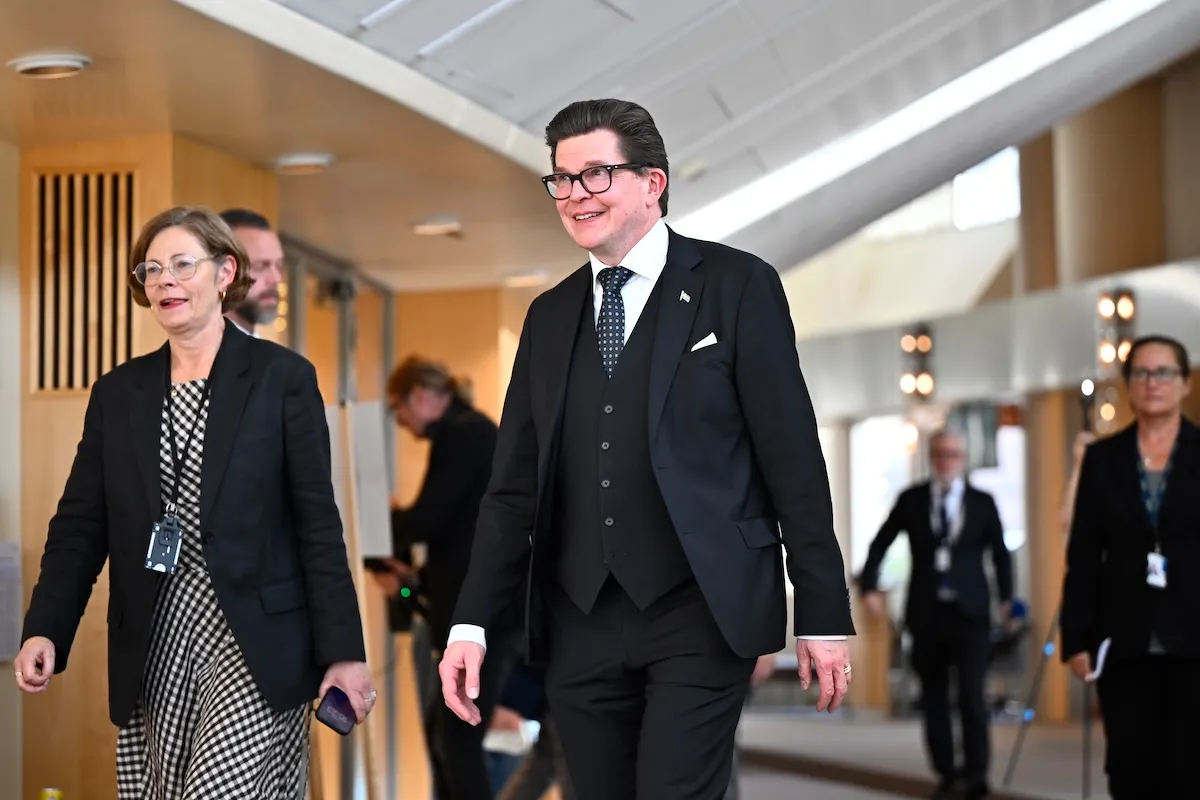
Kristersson's resignation was accepted by the speaker of the parliament, Andreas Norlén, shortly after he submitted it on September 17th, but confusingly having his resignation accepted does not stop him being PM.
In his letter, Norlén pointed to Chapter 6, Section 11 of the Instrument of Government, which, he wrote "stipulates that dismissed members of the Government remain in office until a new government has assumed power."
So what about Sweden's government?
Same story. Sweden right now has a caretaker government, or övergångsregering.
According to a post on the government's website, a caretaker government "mainly makes decisions on current or urgent matters", although the government hinted it may go further – preparing its own budget perhaps – by adding "only explicit limitation on the powers of a transitional government is that it may not decide on special elections".
How will the next prime minister appointed?
They need to be voted into position by the new parliament, something that can happen at the earliest when parliament reopens in the week starting September 28th.
Sweden has a system of negative parliamentarism, which means a potential prime minister does not require even a single MP to actively vote for them. The only thing that is required is that a majority of MPs do not actively vote against them.
It is the responsibility of the speaker to ensure that a new prime minister is appointed, so they seek to nominate the candidate they judge has the greatest chance of being tolerated by the parliament.
So how does the speaker choose a nominee?
The speaker does this by holding a so-called talmansrunda, or "speaker's round", meeting with the leaders of all the parties and talking to them about who they might be willing to support. The speaker then appoints the party leader he sees as most likely to be able to build a workable coalition as sonderingsperson.
This person is given a set period to hold talks with other party leaders. If at the end of the period, the speaker judges they have a good chance of being tolerated by parliament, then he or she presents them to parliament. If not, he either gives them more time or appoints another party leader as sonderingsperson.
As Kristersson resigned before the new parliament met for the first time, the existing speaker, Norlén, launched the talmansrunda.
A new speaker will be appointed when the new parliament meets for the first time.
What happens if parliament rejects the proposed prime minister?
The speaker holds another talmansrunda, and appoints a new sonderingsperson, which can be (but often isn't) the party leader who has just been rejected as prime minister. After the 2018 election, the first time Stefan Löfven was proposed to the parliament, he was rejected.
The speaker has four attempts to propose a nominee that can be tolerated, after which a new election has to be called.
This needs to happen within three months of the rejection vote, with the Speaker choosing the exact date of the election.
What happens after the parliament votes through a new prime minister?
Once the new prime minister is in place, they announce the ministers who will be included in their government, then at the first meeting of the parliament afterwards, the new prime minister delivers a regeringsförklaring, literally a "government declaration", which lays out the approach and goals of the new government.