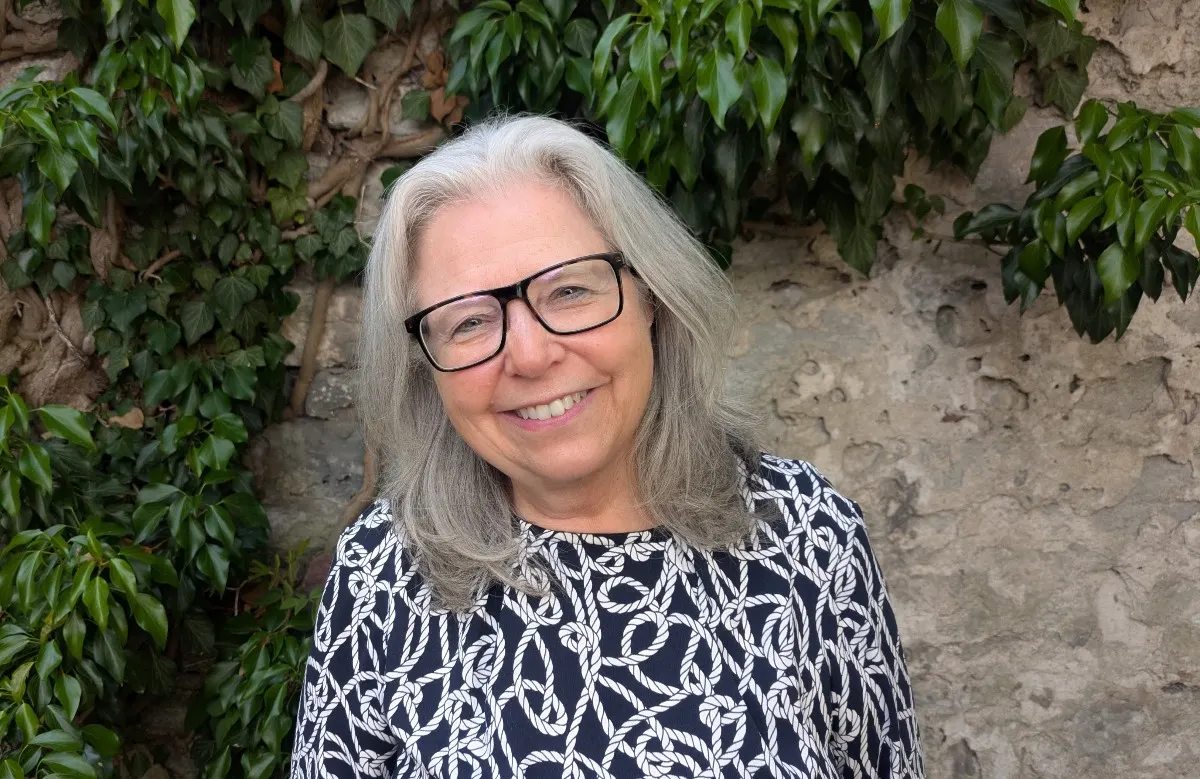
Seeing Maria Mindhammar, the head of the Swedish Migration Agency, sharing a fika with Migration Minister Johan Forssell, it's obvious they have a good working relationship. When he complains of the abuse that comes with his role, she commiserates. When he discusses the difficulties involved in an unpopular proposal to revoke permanent residency, she chips in to describe what a "gigantic task" it would be for her agency.
"We have had good communication with this government," she tells The Local in a one-to-one interview afterwards. "It's the government which takes the decisions, then I receive the annual letter of instruction, and then that's what I have to do."
She pushes back at the suggestion that the government has sometimes been guilty of seeking direct ministerial control over her agency, which is against Swedish political tradition. "This government has done everything as it is supposed to be done. They haven't tried to go outside the system."
In her nearly three years in the job, Mindhammar has overseen, among other things: the introduction of not one, but two, new salary thresholds for work permits, the expansion of detention centres, extra security checks for citizenship, new stricter citizenship rules, and now the EU's Pact on Migration and Asylum.
"I think the agency has stepped up extremely well and focused on aspects that have long been a part of its mission but which were not previously prioritised to the same extent as the current government wants," she says, pointing particularly to efforts to check up on rejected asylum seekers and ensure they leave the country.
"What I am most proud of is that we have done this with total dedication and the will to do as good a job as possible in delivering what the government has ordered."
Given the amount of new legislation and the number of government orders the agency has had to deliver on over the past few years, she argues, it has gone better than anyone could have expected.
"You should not forget that we have been supposed to deliver things extremely quickly and at short notice, so it hasn't perhaps always been as perfect as if we'd had more time. But I think the quality has held up, the correct legal process has held up."
For the foreigners living in Sweden who have had to put up with the long waiting times for citizenship, work permit renewals and other case decisions, Mindhammar's self-congratulation may seem unjustified. In particular, the government order for the Migration Agency to bring in additional security checks in citizenship cases, including, in most cases, an in-person identity check, has slowed down case processing.
But Mindhammar points out that the long waiting times, which she describes as "the balance", is a problem she inherited when she took over, and says that she herself believes the introduction of in-person visits was justified.
"We have tightened our checks which I think is good and was necessary, because in almost every other country you need to make a personal appearance to check you are really in the country and not somewhere else. It has taken more time to do but it was a priority issue for me."
Nonetheless, she says she expects the waiting time for citizenship cases to fall eventually due to the lower number of immigrants coming to Sweden, explaining that she sees the problem as long waiting times coinciding with a large influx of new immigrants.
"What we have been seeing over the past few years is that the influx is falling and as a result we have a greater ability to reduce the [wait times]. We have also increased the number of staff."
She notes that part of the blame for long waiting times should be put on applicants themselves, whom she complains often submit incomplete paperwork that requires case officers to use up valuable case-processing time requesting additional information, or else miss appointments for the in-person checks.
"The first thing you need to do is make sure you have a complete application, because that's often the problem which leads to long handling times," she says.
She is unclear, however, on one of the key questions now being asked by citizenship applicants: whether they will be able to request for their application to be paused while they wait to take language and civics tests for citizenship which do not yet exist.
The respective heads of the agency's two citizenship units in Gothenburg and Norrköping have given different answers on this question, something Mindhammar argues follows from the way decision-making is delegated.
"I have skilled [section] chiefs who have a strong mandate from me to handle cases in the way they find most suitable, so I can't answer the question right now on how we will handle that," she says. "But this is exactly one of those areas where I need to gather my section managers together to decide how we do this consistently."
Mindhammar is keen to point out that her accommodating approach to the government would apply whichever party was in power.
She isn't certain it would be legally possible to pass a new law bringing into effect the transitional provisions for citizenship rules voted down in parliament at the end of April. But if it is, and an incoming Social Democrat government chose to do so, she says, the Migration Agency would have no special difficulty dealing with it, even if both the old citizenship requirements and the new ones would be operating simultaneously.
"We already have loads of different areas where we have two different sets of regulations and we manage pretty well," she says. "Of course it might be more or less complicated, and that will take more or less time, but we normally work these things out. There's never chaos on our side."
For now, her focus is on bringing in the EU's Pact on Migration and Asylum, which officially came into force on June 12th, and which changes the whole process of asylum (which she notes will from now on be called "international protection" instead).
"It means a quick registration of all cases, which is supposed to provide oversight, but which should also identify vulnerabilities. You also need a health assessment, so there's a lot that needs to happen in an extremely short time."
She then falls back on a Swedish expression from ice hockey – "fast pucks" – which is used to describe situations that develop extremely quickly.
"I think it will be be good when it's been up and running a while, but obviously right now, it's snabba puckar."