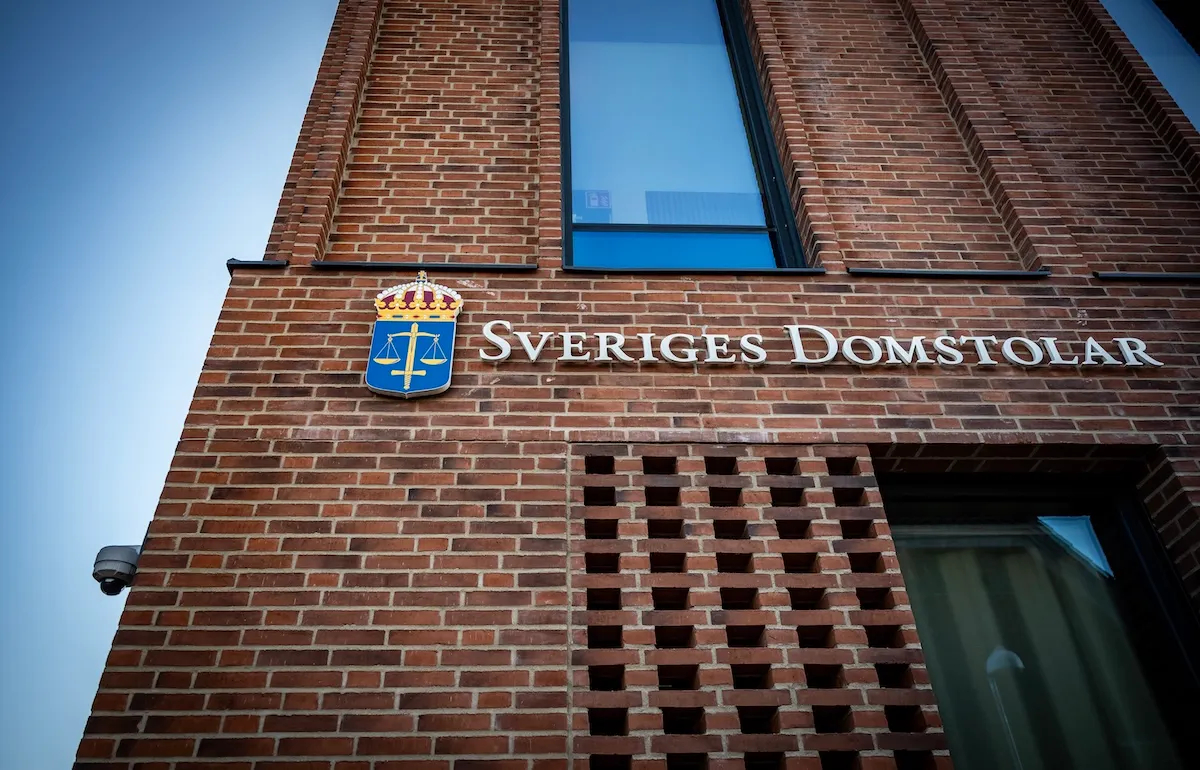
In its first appeal ruling concerning the new citizenship law that came into force on June 6th, the Migration Court in Malmö argued that the government and the parliament had clearly intended that the new requirements should apply to pending cases, and argued that such retroactive legislation did not conflict with either Swedish or national law.
The man appealing, who comes from a non-EU country and has lived in Sweden since 2019, applied for citizenship in June 2025. The Swedish Migration Agency then rejected his application on June 9th 2026, three days after the law was changed to increase the residency requirement to eight years.
In the appeal, his representatives, who are connected to the Fair Transition campaign, argued that the Migration Agency's decision conflicted with EU and national law.
READ ALSO: How to appeal if your application for Swedish citizenship is rejected
Firstly, they argued that retroactively applying a new law in a way that was disadvantageous to the applicant was "contrary to the principles of legitimate expectations and equality before the law". Secondly, they argued that EU law imposes "requirements for predictability and legal certainty", and thirdly, they argued that there were shortcomings in the way the Migration Agency handled the case because it had failed to assess the conditions for exemption.
“When there are no transitional provisions accompanying a legislative change, the legislature’s intentions are often decisive in determining which law should be applied," Fredrik Löndahl, one of the two chief judges ruling in the case, wrote in a press release. "In this case, the legislative change was preceded by considerable public debate and a vote in parliament, so there can be no doubt about the legislature’s intention."
While citizenship are largely a matter for national governments, he continued, EU laws did have a bearing, but he argued that the decision to refuse the man citizenship under the new did not conflict with EU law.
“The court has reviewed the relevant principles of EU law and found that neither Swedish legislation nor the Migration Agency’s handling of the case conflicts with any of them," Annika Friberg, the other chief judge, found, "The conclusion is therefore that it was correct to apply the new provisions, even though the man met the requirements in force when he submitted his application."
The decision was made by two chief judges and three lay magistrates.
According to the Fair Transition campaign, one of Sweden's two migration courts, the court in Gothenburg, has already rejected several appeals, but this is the first decision from the Malmö migration court, which is generally viewed in Sweden as the leading court for migration law.